Collard Greens Roll-ups

Until I worked at Red Wagon I never ate collard greens before October. I grew collards at home for years and only harvested and ate them after a frost. Collards, all leafy greens, defend themselves against freezing weather by turning starch in their cells, into sugars.
Kale, chard, cabbage, Brussels sprouts, all are sweeter after a frost but still delicious before, and I eat them all summer long, so why not collards? Why not indeed.

Collards

Collards are not as bitter as kale and not as tender as chard or spinach. Collards lend themselves to longer cooking times than other greens but are surprisingly good raw, especially in roll-ups.

Prep #1 Pretty much anything you can roll-up in a tortilla or wrap will be delicious in a collard roll-up.
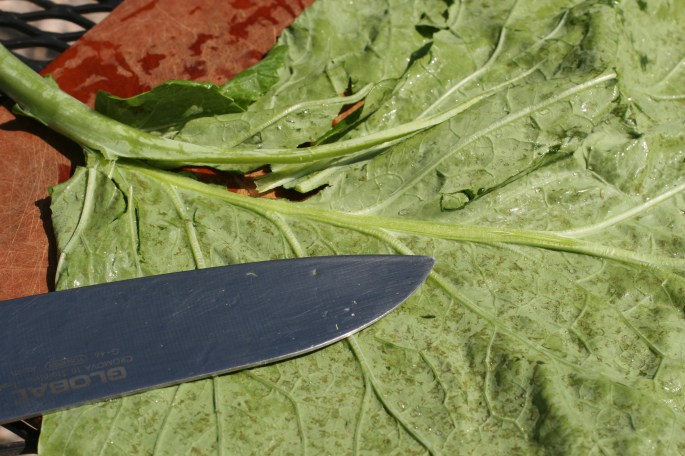
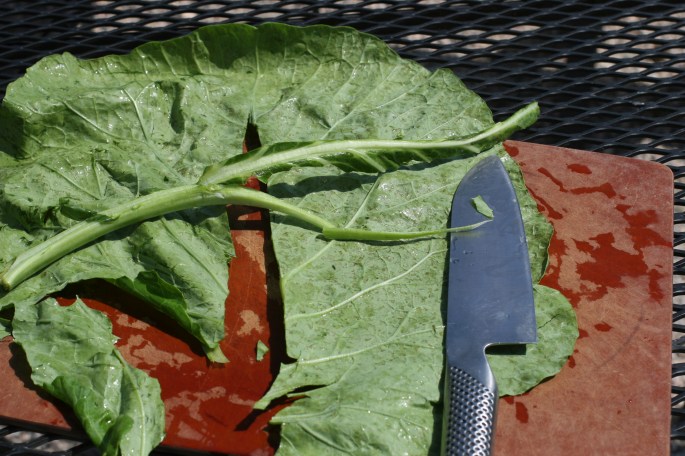
Collards have a tough stem that needs to be dealt with. You can shave it thin.

De-stem

Or cut it out.

De-stem collards

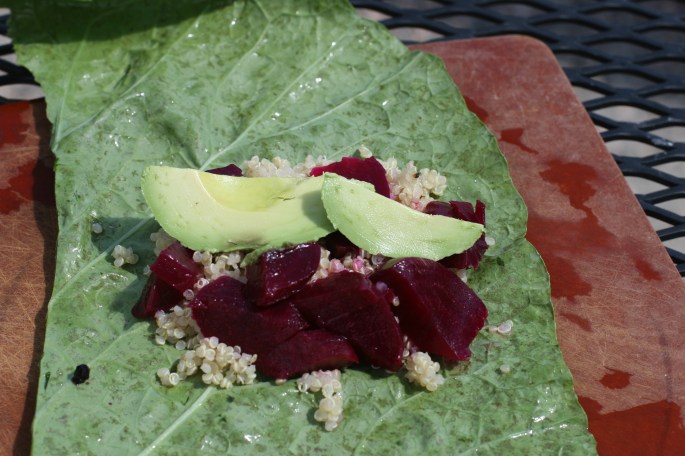
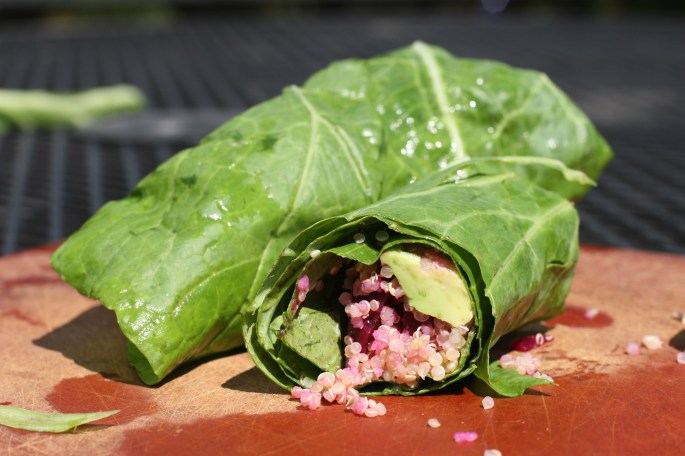
Then just put what ever filling you like in the washed collard leaf and roll it up like you would a burrito. Egg salad and tuna salad type fillings are good. But use what you like. I had some quinoa, beets and avocados.

Add ingredients

Roll up

Talk about healthy and filling. You can make several roll-ups at one time, and keep them in the refrigerator for several days as a make ahead meal.

Posted in 2014, Collards | 1 Comment

1, 1, 2, 3, 5, 8, 13….

With the end of August approaching, while the fields at the farm are producing a ridiculous amount of food of all varieties, comes a shift in thinking for me personally. Starting next week, I begin teaching again.

Working on the farm has always offered me a unique balance of down-and-dirty physical labor with the weird cerebral nature of teaching college art. Like every year around this time, the transition from body to mind brings it’s stresses its own special Cartesian way. However, there are moments when the these two worlds of farming and academia overlap, not just on the calendar, but in the general notion of beauty in the form of the veggies we harvest and eat.

When teaching the fundamentals of art, we talk about principles of design that help order visual information — balance, color, ratios, symmetry, composition — the list goes on and on. I often observe similar principles at work in fields in individual crops. From the way that the layers of fennel root overlaps in a fan pattern as it branches out into feathery plumes of licorice to the alternating growth patterns of the kale leaves, there is a remarkably ordered composition.

There is a relationship to the mathematical sequence of numbers in how things grow, how branches branch to the number of leaves, fruit or berries on a given branch— the Fibonacci Sequence. This sequence is also related to the Golden ratio, a proportion of thirds that is often used in visual art and the Golden Spiral, which can be seen in many brassicas, like cauliflower and, my absolute favorite because of how curiously perfect its fractal pattern is, Romanesco. So, perhaps there is more connection and overlap with the two worlds, in that one borrows from the other. So, eat with your eyes first this week!

So, thank you all for a great first half of the CSA season. I will be behind the scenes for most of our pickups from here on out. I look forward to celebrating with you all at our CSA party in October. See you then!

Posted in 2014, Farm | Comments Off on 1, 1, 2, 3, 5, 8, 13….

CSA week 14

Week 14! Did you catch Wyatt’s farm update?  He talks about his plans for CSA verses Mother Nature’s ideas.

This week we hope to being you:Stella loves beans

Regular Share
Beans
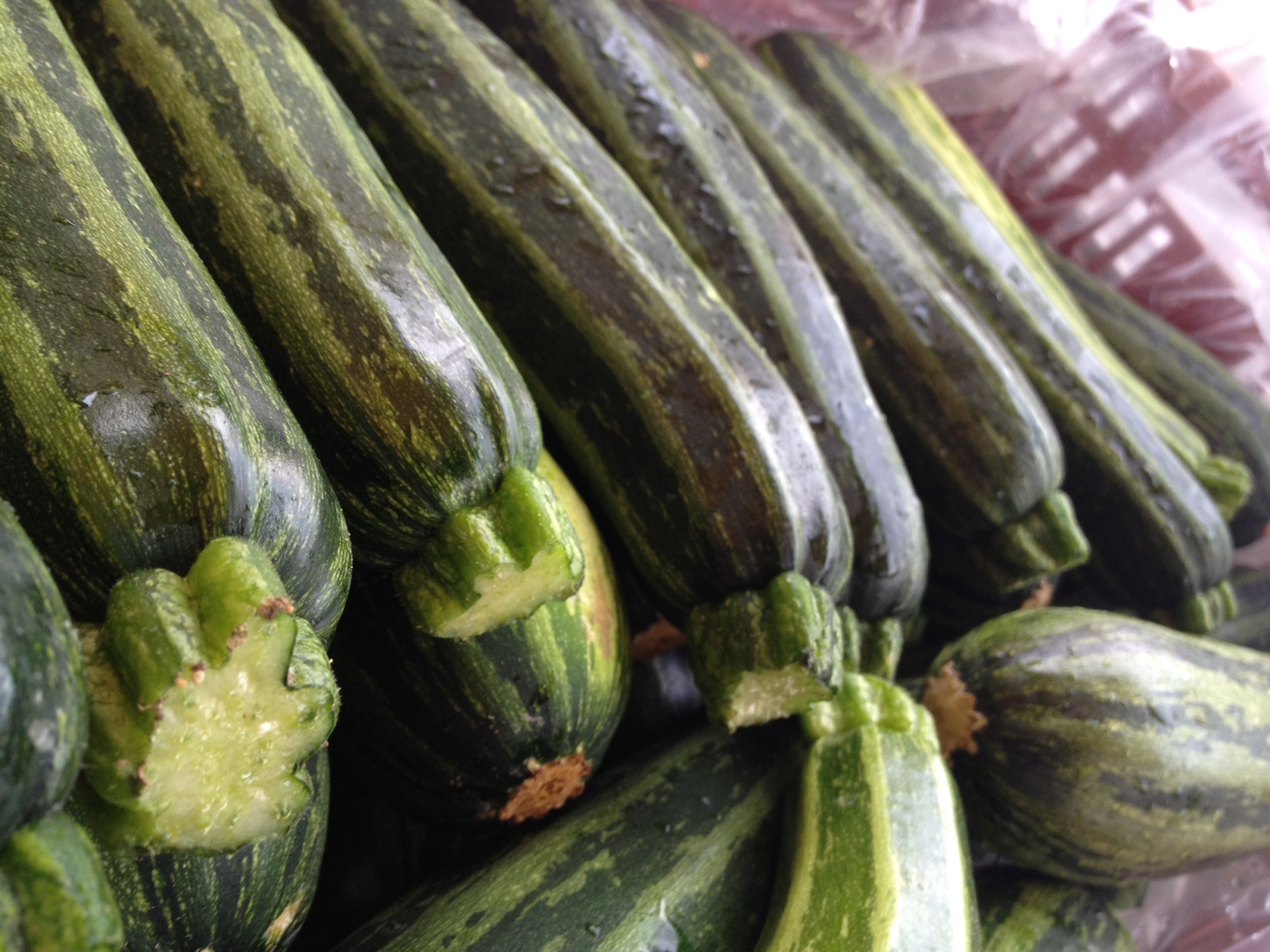
Zucchini
Cucumber
Onions
Carrots
Choice: Potatoes OR Fennel
Choice: Kale OR Collards OR Chard

Large Share Additions
Potatoes AND Fennel
Extra Choice: Kale OR Collards OR Chard
Tomatoes

Fruit Share
Peaches

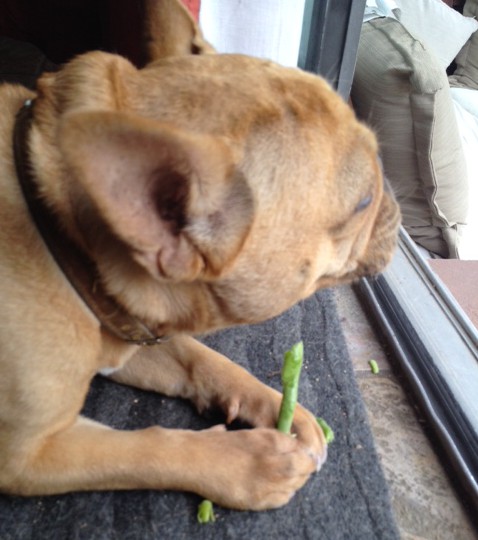
A few weeks ago I tried Mo’s bean and peaches recipe.Stella enjoying a bean  I was the floored by the yumness, meanwhile, Stella was on the  floor with the raw beans she manage to scavenge.

Posted in 2014, Farm, Newsletter | 1 Comment

Cool Weather Continues

This spring and summer have been unusually cool.  The last time we as farmers experienced a season this cool was the year we started in 2004.  That year we planted 10,000 tomato plants that did not yield a tomato.  The plants were enormous but froze in the fall before getting a chance to ripen their fruit.  We normally get a first frost on September 15th.  Our first year we received a grant to try the plastic mulch that we now use for most of our warm season crops.  The tomatoes planted on plastic yielded tomatoes that year.  The tomatoes were ready about the same time as usual for tomatoes planted in bare soil.  Since that first year we have improved our growing techniques and usually have eggplant and peppers by August 1.

When I plan for the CSA, I try to not plant too much that is ready at one time since we can’t give you $50 in food one week and none the next.  I expect certain crops to be ready for CSA around the normal dates.  This week I am frustrated – we have plenty of food just not what I wanted to give you in a week that will end in mid-August.  We planted 3,000 tomato plants, 4,000 pepper plants, 1,500 eggplant.  The plants are looking great but are just setting fruit on many plants.  It is hard to know exactly what we will get and when the first frost will come but we are likely to only get two thirds or even half of normal on these crops.  All of the costs to produce them have been the same and the picking labor will be less.  We often pick $5-10 of fruit per plant on these crops.   Losing $3-5 per plant times 8,500 plants is $34,000.  We will work to make sure CSA gets tomatoes, peppers and eggplant when they are ready.  It is not a planning error that we don’t have these summer crops on time–just a cool weather situation.  I don’t know exactly how much cooler this year is but the nights especially have been noticeably cooler than normal and most of the days 10-15 degrees cooler as well.

In better news at least the tomatoes, peppers and eggplant look healthy and productive, just slow.  We do plant insurance crops like beets, carrots, kale and chard that hold well in the field and that can be picked when needed.   We have food for CSA just not the summery crops that I wanted and I know people are all waiting for.  Our fall broccoli and cauliflower plantings look like the best we have ever had.   We are well past the half way point of the CSA season and look like we are going to be able to finish the second half with some great food.   We planted our fall greens, radishes, etc. last week and they have emerged.   I hope we can find time to weed them while being understaffed and busy harvesting everything that is ready.

Posted in 2014, Farm | 1 Comment

Hot Air Balloons

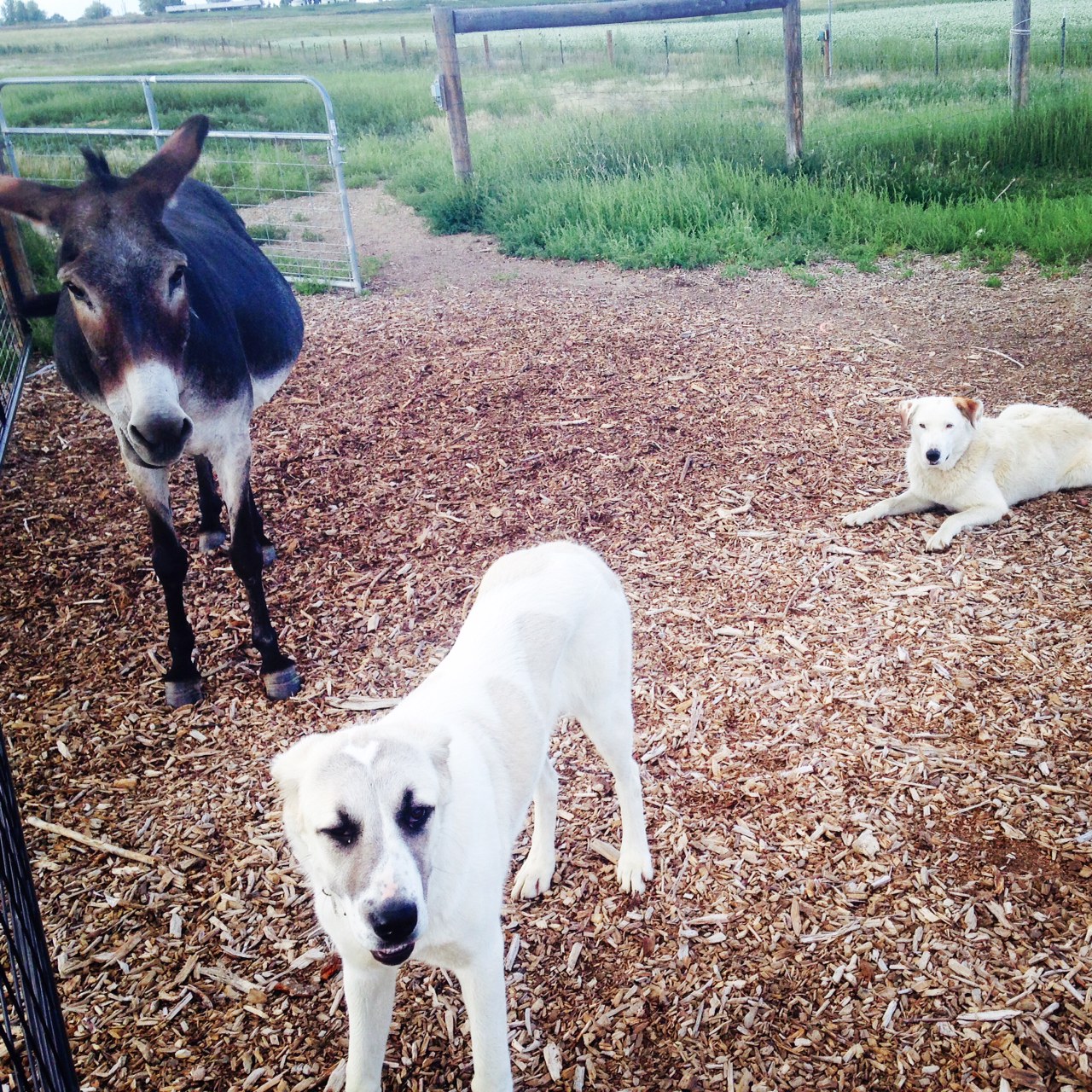
ellie bell and doggiesA common site on the farm on 63rd are animals — of all sorts, wild and penned-in and some somewhere in between. There are long-necked llamas, gregarious goats, a pack of hooligan alpacas, guard geese that can sense fear, chickens, and the sweetest donkey. And of course, there are the two dogs, who often accompany the early harvest, Cedar and Roxie.

Roxie is a gangly teenager of a puppy with a white heart-shaped spot on her forehead. At somewhere around 8 months, her stature towers over many full-grown dogs. When she runs around her limbs comically bend in awkward ways. She often follows the workers to the fields as the harvest begins in the morning. She’ll pounce like a cat on anything that rustles or moves, whether or not it happens to be in the middle of the basil or some other crop.

Cedar is the watch dog, a powerful, vocal, and authoritative watch dog. Often in the mornings, she will sit remarkably quiet for what seems like hours while looking South. Then, she’ll suddenly burst into a round of barking. For the longest time, I couldn’t figure out why she would wait silently, always looking in the same direction. One morning, while harvesting Tuscan kale bunches, I spotted what she was waiting for off in the distance — Hot air balloons. She was waiting for them to rise over the tree line every morning, so she could bark at them and tell them who’s boss. Smart.

During a long harvest day, Roxie rolling over for a belly rub, the geese chancing you around or Ellie Bell, the donkey, coming over to the fence to say “hi”and to see if you have any treats for her, can give a kind of relief only animals can offer.

Posted in 2014, Farm | Comments Off on Hot Air Balloons

CSA Vegetable Stock

People often ask me if they can use the tops or peels of vegetables. The answer is almost always YES!
When you are in a CSA once a week you are inundated with vegetables, making stock is a great way to use up all the parts of your CSA share and open the door to some healthy quick meals.

This is most of my CSA share this week and some leftovers from last week, the corn is from the Farm Stand and was lonely in the vegetable drawer alone. I like to do an inventory once a week to keep things fresh and it helps me plan meals better.

Mixed Vegetables
*gack! look at that fly on the leek!

I am going to trim the parts of the vegetables we won’t eat, like leek tops and chard stems, and green bean tips, and make some stock. There is no right or wrong here. Use what you have. I have read not to use cabbage or broccoli in vegetable stock. I disagree. I like the taste of broccoli and cabbage stock. Just make sure you balance it with some onions or leeks and maybe some herbs if you have them.
Here are the trimmings of this weeks vegetables in my stock pot this week. I like to eat beet greens but I had chard this week so I sacrificed my beet greens for the sake of the stock.
The red beet greens will make the stock dark. Keep that in mind if you want a lighter stock, for say a leek risotto you might want to leave the red beet greens out, or use golden beets.

Chopped Vegetables

Now I have a more manageable harvest of vegetables that will use up much less space in my refrigerator.

Leftover Veggies

Most everything is wrapped up to be returned to the vegetable drawer for meals later this week.

Next, add enough water to your the pot to leave some of the vegetables above the waterline. I like to add bay leaf or two, oh. I forgot I had some celery leftover from last week so I added a few stocks of that last minute.
The vegetables have lots of water and will break down quickly, unlike stocks made with bones. Less water is better than more when making vegetable stock.

Simmer in water

Put the burner on high and as soon as the water warms up start tasting the stock. You will cook this for about an hour. Vegetable stock can taste muddy of you cook it too long so taste, taste, taste.

Salt to taste

My stock has been cooking while I have been typing this and the house is smelling wonderful. It’s been a little longer than an hour since it started to boil and I can tell by the smell we are getting close to being done. See how the the color is deepening, it’s a little darker than it looks in this picture. See how the vegetables are breaking down and turning darker. They are giving up all their flavor and nutrients to the liquid. Remember when you are tasting you will add salt later, salt will brighten up the flavor. At some point it will start to taste round and balanced, that is when it is done. You won’t taste just one vegetable, you will taste a balanced stock.

Stock check

All that is left is to strain the spent vegetables from the liquid and pat yourself on the back for making something beautiful out of next to nothing.

Posted in 2014, Recipes, Soups | Comments Off on CSA Vegetable Stock

Beet Hummus

I got this recipe off of Whole Foods website.
I have made it twice. Once as written, then a second time I replaced the cooked beets with pickled beets like the ones I made here last week.
Both versions are delicious but the hummus made with pickled beets had a more interesting and more ‘beet’ flavor.

Beet Hummus

That’s it. Short post but worth a mention as it was easy, fast, tasty, and keeps for a long time.
Have a great week.

Posted in 2014, Beets, Recipes | Comments Off on Beet Hummus

CSA week 13

Lucky week 13!  This week we hope to bring to CSA…photo

Regular Share
-Carrots
-Zucchini
-Cucumbers
-Choice: Arugula OR Beets OR Squash Blossoms
-Choice: Kale OR Collards OR Chard
-Choice: Celery OR Leeks
-Herb Choice: Basil OR Parsley OR Sage OR Chives OR Mint

Large Share Additions
-Extra Choice: Arugula OR Beets OR Squash Blossoms
-Extra Herb Choice: Basil OR Parsley OR Sage OR Chives OR Mint
-Japanese eggplant

Fruit Share
-Peaches

Posted in 2014, Farm, Newsletter | 1 Comment

Watermelon Bandits

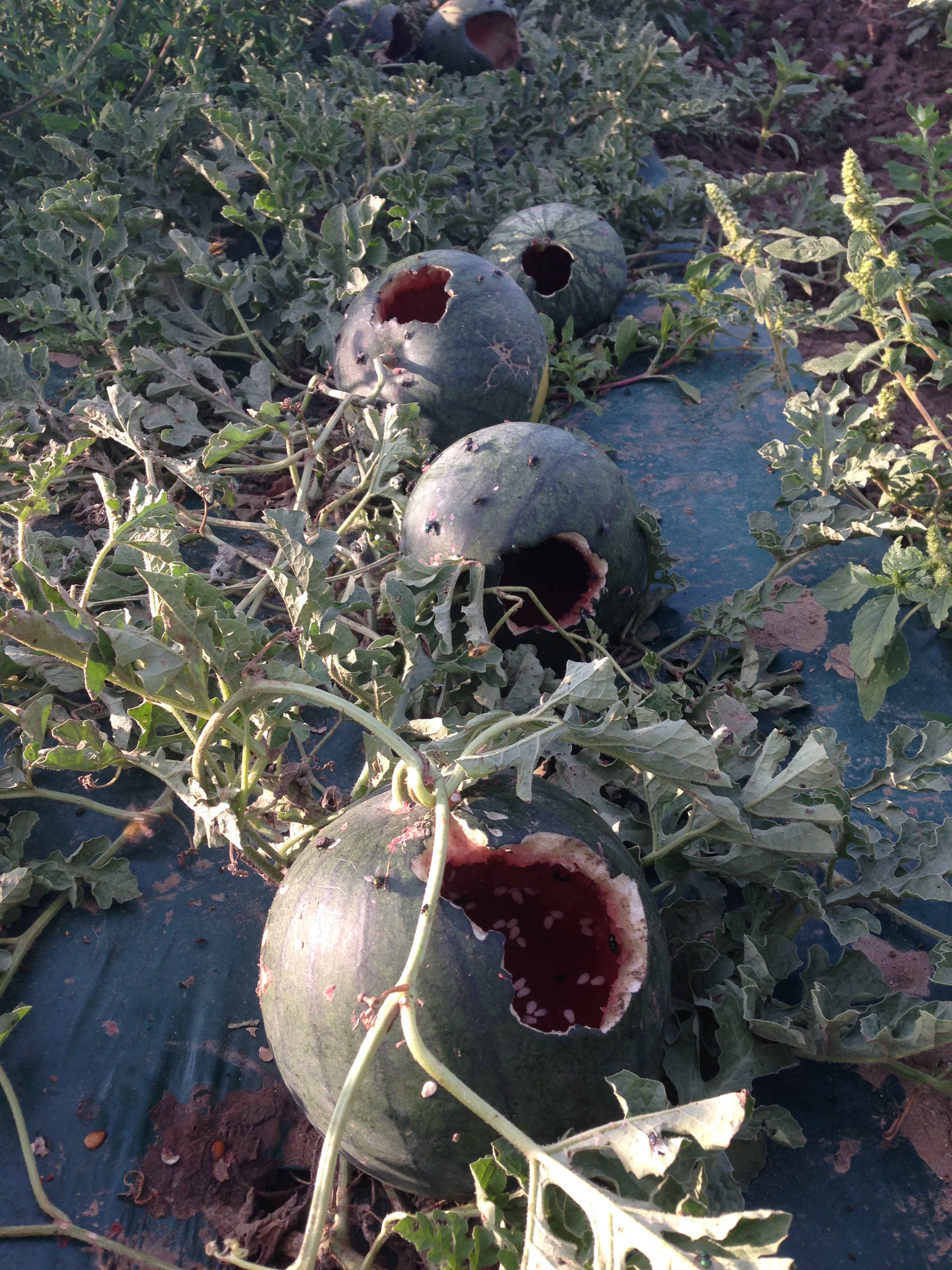
Sigh…Every year we have crop failures. Blame the raccoons for the watermelons. We have a gorgeous field of watermelons that are just about ripe. But the raccoons know this, too. I think every raccoon in Boulder County must be visiting our farm at night. We have a field full of hundreds of watermelons. About 70% of them have been eaten by the raccoons. I can just imagine the tubby little raccoons sticking their sharp claws through the watermelon rind, then using their paws to scoop out all the delicious, sweet flesh of the watermelon. Then they waddle away with their full bellies after a night of gorging in our field.

Watermelons eaten by racoons

Watermelons eaten by racoons

A few years ago the coyotes found the watermelon field. They would pull the melons off the plant and roll them away. Then they would open them up and eat every last bit up to the green skin, so that skin would collapse on itself.

The watermelons are at our farm on Valmont Road. Wyatt says that next year we will try putting the watermelons at the farm where we live, on 63rd Street. The soil at 63rd Street isn’t as good for melons–it has too much clay. But we have 2 big dogs who woof all night and keep the coyotes and raccoons away. Maybe then you will all get to enjoy some watermelon on a hot August day.

Posted in 2014, Farm | 2 Comments

My Favorite Tool

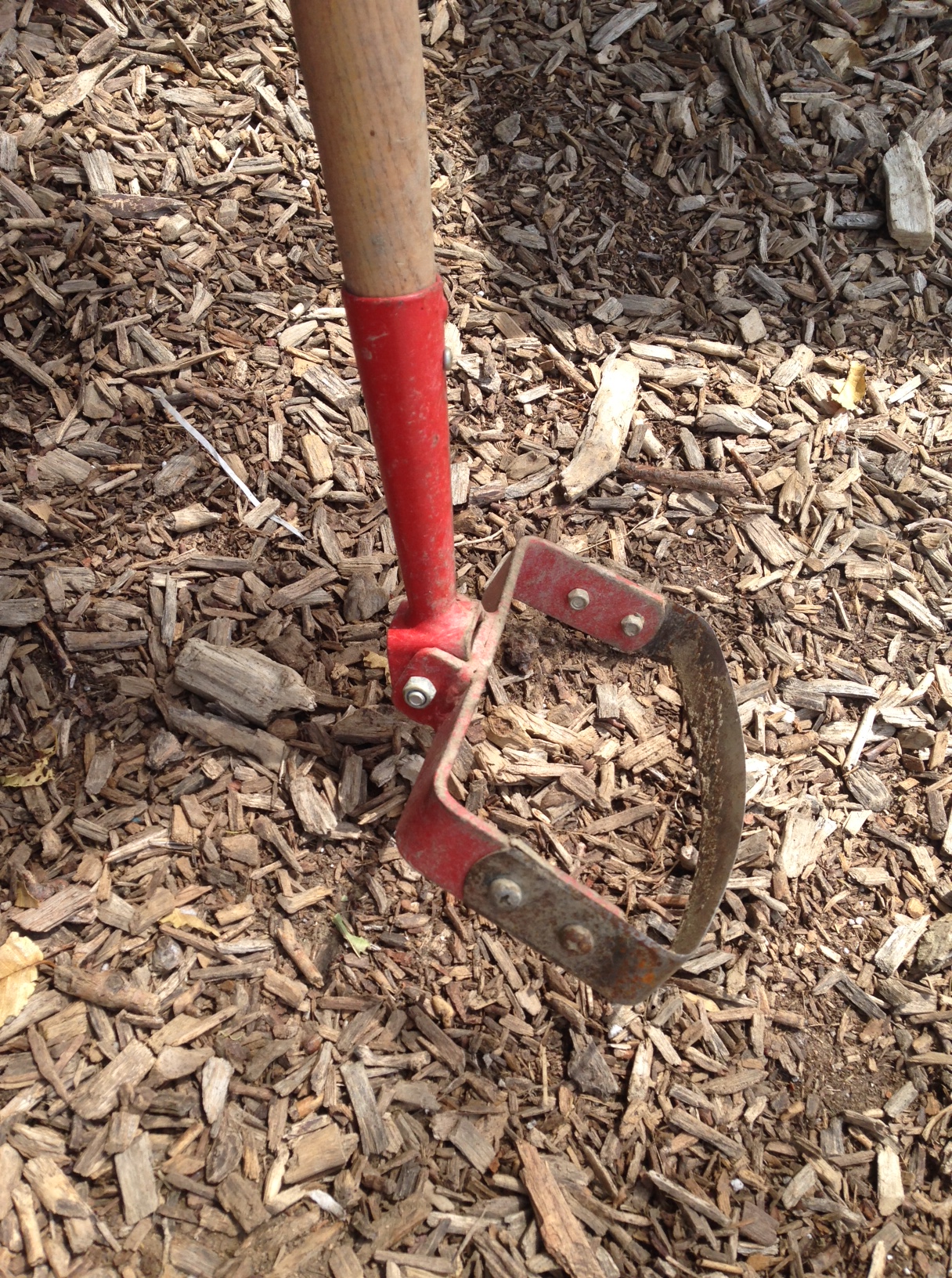
scuffle hoeOne of the many important jobs on the farm is weed mitigation.  From the chill of early season to the heat of the summer, the battle between our crops and weeds is full on. Weeds like Mallow, Vine Weed, Thistle, and Dock Root sprout up everywhere. There are some weeds that are edible like Purslane and Wild Amaranth and then some alien-looking ones, like Dodder, that is a parasitic weed that looks like strange yellow spaghetti. Edible or not, they are weeds and enemy to any farmer. If the they win out, our crops struggle to compete.

Weeding takes many forms on the farm. Much of the work is done by hand. This is slow, but effective if executed properly. Early in the season, full days are devoted to pulling out these pesky weeds. Knee pads and thin gloves ease the pain of being crouched over all day. When I am weeding, I find I have three positions I alternate through to help the repetitive stress. Bending at the waste, kneeling, and crouched on one knee.

Then, there are some tools that aid the weeding- bludgeon hoes, long skinny shovels, pitch forks. Of all these, my favorite is something we call a scuffle hoe. Like any other tool, it has a long wooden handle, but on the end, instead of the normal spade-type blade, it has a thin looping blade 1 1/2 inches wide. Instead of hacking away at the weeds with a large swooping motion from the shoulder, with the scuffle hoe, you place the blade on the ground and push it under the surface of the soil and pull back and forth. This cuts the roots and is quick and effective on young tender weeds.

With this tool, I get into a rhythm that comes with muscle memory. Push and pull, watch for the garlic or pumpkin plant, get as close as possible. Take a step forward and repeat. My mind can wonder, but, because of my competitive streak, I always keep one eye on those working beside me, being sure not to fall behind or even better just ahead of them.

The fields are looking clean this year, no small task with a small work crew. We are winning out, it seems.

Posted in 2014, Farm | Comments Off on My Favorite Tool