Thank you so much to everybody who came to our CSA party yesterday and helped us celebrate another great season! Do you have a great photo from the party? Send it to us–we’d love to see it!
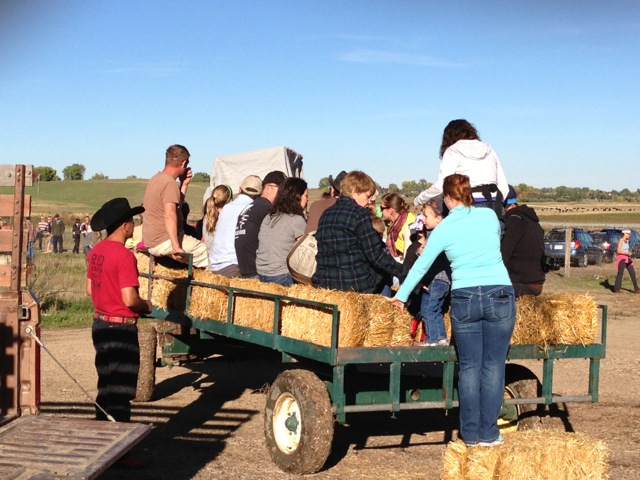
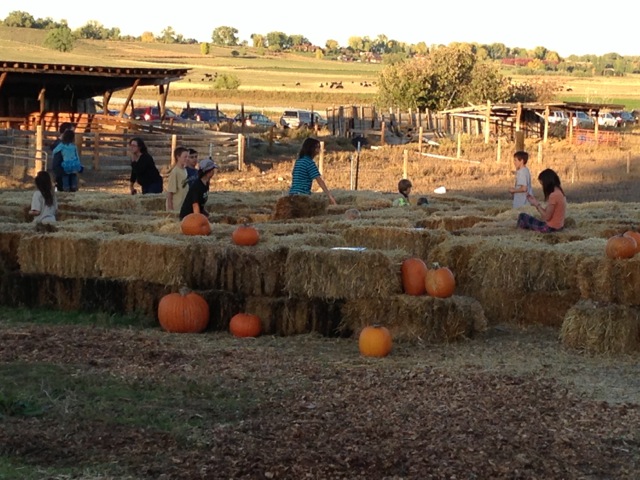
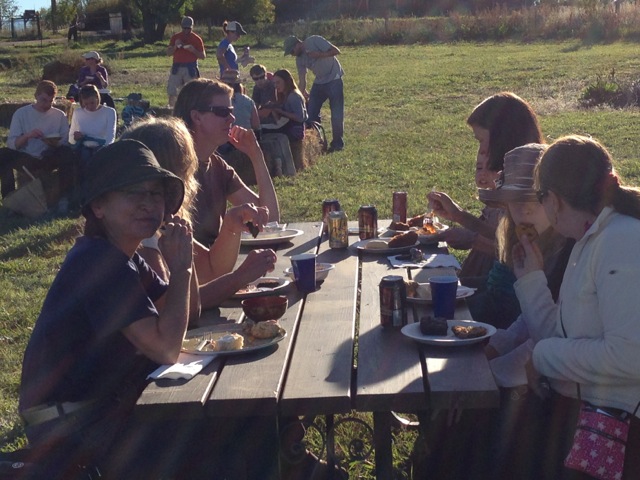
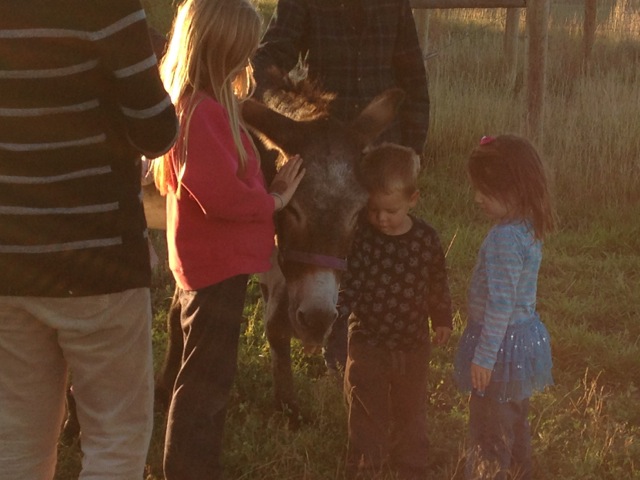

Thank you so much to everybody who came to our CSA party yesterday and helped us celebrate another great season! Do you have a great photo from the party? Send it to us–we’d love to see it!
Our two farm babies have arrived! Samantha was born on September 24 and Jimena was born on September 27.


We’re still collecting clothes and other baby items for these beautiful girls. We’re also collecting clothes for other farm worker children at our farm. Below is a list of specific items that people have requested. But we’ll gladly take clothing for kids of any age (boy & girl). If none of our farm worker kids can use them, we will pass the items on to other farms or make sure they get donated.
Newborn girl (2 baby girls born in September)
–clothes
–shoes
–blankets
–diapers
–I’m sure any other items for a newborn would be helpful, too!
1 year old girl
–clothes (size 24 months)
–shoes (size 4 1/2)
7 year old girl
–clothes (size 8)
–shoes (size 3)
You can bring items to CSA pickup or drop them off at our farm stand on 63rd St. Or we can make other arrangements if neither of these options work for you. Thank you so much for your help! I know our farm workers really appreciate it!
It seems like I spent a lot of the day on Thursday trying not to have my boots fill with water.

I already know that this blog post is going to be too long. I know there will be too much video. But I still can’t believe the things I have seen over the past 4 days and I don’t know how else to convey them to people. This post is intended for a variety of readers: our CSA members and other farm customers, current and former employees, and friends and family near and far. I’ll show images from both of our farm locations, as well as some images from around Boulder County. And I apologize in advance for making you motion sick with my video.
It all started Wednesday night. My phone was sending off alerts like crazy with flash flood warnings. Wyatt and I drove by Boulder Creek and Left Hand Creek, but the water was low, so we didn’t worry about it.
Thursday morning was another story. I was still asleep at 7:30am when Wyatt came and got me to tell me that the road was washed out to our Valmont farm and that he was sending our farm crew home. He had already decided to cancel our CSA pickup for the day. I also received a phone call saying that our CSA pickup site at Bonai Shalom was under water. Wyatt said he was going to go to the Valmont farm to move our tractor to higher ground. I went with him and that’s when I started to see things I never could have imagined. I got our my smart phone and started taking photos and video and could hardly stop myself. My jaw was dropped and I felt dazed and amazed all day (in fact, I still do–4 days later, on Sunday).
Here’s what I saw in various places:
Red Wagon at 63rd Street
Our house and farm are not in the 100-year floodplain. But NCAR says this is a 1000-year rain event. Waterways filled, then overflowed into other waterways. Creeks and ponds spilled over and sent rivers of water into houses, roads, and fields.
At our farm it started with Left Hand Creek. There was so much rain over night that the creek filled up and a “debris dam” formed. This dam burst around 3am Thursday morning and sent a huge surge of water down the creek (which had really become a raging river). Left Hand Creek overflowed into our ditch, the Holland Ditch. There was so much water in the ditch that it spilled over our closed head gate and poured about 5 cfs (cubic feet per second) of water into our ditch.

The water from the Holland Ditch comes about half a mile down a lateral to a 3-acre pond on the north side of 63rd Street. There is a 6-inch pipe that runs under 63rd Street and that is how we usually get water to a holding pond on our farm. The 3-acre pond overflowed from all the water coming from the Holland Ditch. Water was rushing down the overflow spillway, but the spillway couldn’t keep up. So the pond just started flowing over the banks of the pond.Wyatt was worried about the pond failing so he opened the outflow from the pond, which goes to a concrete diversion box, which goes to the 6-inch pipe that runs to our holding pond.
In the video you can see the overflow spillway, then the water running over the grassy banks of the pond, then Wyatt trying to jam a board in front of our 6-inch pipe so that we wouldn’t get even more water on our side of the road. The board wouldn’t hold, so water kept flowing into our holding pond.
The 6-inch pipe was full of water and gushed under 63rd Street into the holding pond on our farm. This is an man-made pond that was created by piling up a lot of dirt and leaving a hold in the middle for the water. The water reached the top of this holding pond.
At the opposite end of this holding pond, several inches of water ran through the cattails and overflowed the pond. You can also see the water rushing out of the white emergency overflow pipe for the pond. This created a little river of water that ran down our farm roads and into our crop fields.
There was also a stream of water that ran through our hoop house. At the bottom of that field the road was about 6 inches deep in water. The irrigation ditch that runs adjacent to our field had so much water rushing through it that it washed out the earthen bridge on that connects two of our fields.

The water washed out the earthen bridge that connects two of our fields.
I wondered what happened to the culvert that ran under the bridge. I found it on Friday afternoon once things dried out a bit. It was still there! It just couldn’t handle the volume of water running through it.

The water in the irrigation ditch got so high that it flooded into the bottom of our tomato field. The “river” at the very end of the clip is actually a farm road.
I walked the length of the tomato field on the farm road, which was under several inches of moving water.


As I kept walking I saw that our pumpkin patch was flooded, too.

The soil in the field was so soft from all the water that I was sinking 6 inches into the mud.

The photos and videos above were all from Thursday. On Saturday the sun came out for a little while and the bees came out to work.

Red Wagon at Valmont Road
We normally access our Valmont farm from Melissa Lane. There is a little bridge at the base of the hill. The creek that runs under the bridge is about 5 feet wide. On Friday we saw that the creek was over 100 feet wide and the road was impassable. Wyatt and his mom were pondering how to get across the flood waters to the dirt road that goes up the hill on the other side.
This is the other entrance we could use to get to our Valmont farm. You can see the dirt road on the far side of the stream in the middle of the clip. You can also see the railroad ties that used to line either side of the bridge. The stream is usually about 10 feet wide, but on Friday it was over 50 feet wide and washed out a lot of the bridge. There was also a huge hole in the road where the water was running. It was about 3 feet deep and big enough to swallow a pickup truck!
The stream was still pretty close to the barn on Friday. I’m glad we moved our tractor out of there on Thursday morning!
On Saturday Wyatt and I were able to make it into the fields on foot. Thankfully all the crops looked fine. This bucket was sitting in the field and was filled with 9 inches of water! That was rain that had fallen between Wednesday night and Saturday morning. We used to think that 1 inch of rain was a lot for Colorado.

We walked out of the fields on Saturday and were able to cross the bridge on foot. But huge sections of the road were washed away. The puddle on the far side of the bridge was about 6 feet across and didn’t look like a big deal. But when I stuck a stick in the puddle, it was 3 feet deep! We can’t even drive the tractor through that.
Wyatt found a crawdad that was swimming across the road.

Left Hand Creek
We drove around a lot, but I saw the most incredible flooding on Left Hand Creek, which runs half a mile from our house. The worst place I saw was at the intersection of Oxford Road and 41st Street. Our friends, Chet and Kristy (of The Fresh Herb Company) live there and grow flowers in their farm fields. Left Hand Creek usually runs through the back of their farm. (This is about 3 miles west of our house.) A debris dam formed in Left Hand Creek early Thursday morning. When the debris dam burst, it sent a surge of water down Left Hand Creek. The creek jumped the banks and carved a new channel. By the time it reached Chet and Kristy’s house it was a raging river, over 500 feet wide. This video is looking west towards their house and the intersection of Oxford Road and 41st Street. There is usually NO water here. It should just be Oxford Road and fields to either side of the road.
While we were watching this river with our jaws dropped, we ran into Cam, who is Chet and Kristy’s neighbor. The new river was running across Oxford Road and into his property. He said he heard a loud noise at 3:30am, but thought it was a wind storm. At 5am he looked out and realized he now had a river in his yard.

Wyatt was looking around at Cam’s house and found a perch in the garden.

Closer to our home is a bridge over Left Hand Creek. The bridge is on 63rd Street at Modena Lane, half a mile south of our house. The creek was only 10 feet wide earlier in the week. On Thursday it was a river over 100 feet across.

One of our farm fields (the Bishop property) is adjacent to Modena Lane, which is the street on the north side of Left Hand Creek. On Saturday I drove to the end of Modena Lane to see the debris in our field.

When I got to the end of Modena Lane, I got a closer look at our neighbor’s house. Left Hand Creek decided to take a short cut through their garage!


Left Hand Creek should only be about 10 feet wide at this spot. This is behind the house.

Boulder Creek
Boulder Creek was also an unbelievable sight. The creek should be 20 feet wide and shallow at the bridge on 75th Street. Instead the water was roaring under the bridge and had spread out for about 500 feet to the south of the bridge and was flowing through the fields on either side of 75th Street.
We walked south to see the water flowing across 75th Street. At the beginning of the clip you can see the solar panels at the water treatment plant. Boulder Creek is flowing over several hundred feet of 75th Street and is washing away the shoulder on the east side of the road.
Boulder Creek flooded over 500 feet along the side of Highway 287. At the end of the clip you can see the bridge where the creek should usually flow.
End of the Storm
It’s late Sunday night (really, early Monday morning) and I’m still thinking about the last few days and wondering what the coming week will hold. We lost power Thursday night, but Poudre Valley miraculously got the power back on within 24 hours. Left Hand Water was able to keep our water on (although many of their customers are still without water). The water currently is not potable, so we can’t use it for drinking, cooking, or washing vegetables that we harvest from our farm fields. We’re hoping to have potable water coming out of our taps in the next day or two. We were not able to do any farm work on Thursday or Friday and the Boulder Farmers’ Market was cancelled on Saturday, due to its location next to Boulder Creek. It’s hard for us to process this interruption in the farm season at the height of our harvest.
We’ve been trying to stay in touch with some of our farm workers. Sarah is trapped at her house in Lee Hill. Clay is in Jamestown. We worried about him for several days until I was able to contact one of his friends who had evacuated from Jamestown. She said that Clay is safe, but is shoveling out his house and garage. I don’t know if he will be evacuated soon or if he will be in Jamestown for many days or weeks. Currently there is only radio communication with Jamestown. Carleen works at our farm stand and is also a nurse. She went to Lyons at the beginning of the storm to provide medical assistance, but got trapped by the flood waters and was in Lyons for several days.Victoria has been emptying the contents of her flooded basement. Brendan and Isaac live on Modena Lane. I watched their house anxiously for several days while Left Hand Creek got closer and closer to their house. Their basement flooded a bit, but it could have been much worse. Other farm workers live in Longmont, the city that was cut in half by flood waters. They are having trouble finding streets that are open to get around.
Both farm roads to our Valmont farm are still impassable by vehicle. We don’t know who will be able to make it to our farms this week to work. Our farm manager happens to be in California this week and Sarah was supposed to fill in for her, but she is trapped in Lee Hill. I’m sure we will figure things out, but it will be bumpy getting things running again. Fortunately, most of our fields have dried out and our crops look amazingly good considering what they have been through in the last few days.
At our house, the crawl space flooded on Thursday night after the power went out and the sump pump went off. But Wyatt was able to get our generator on Friday morning to get the sump pump running again. Our roof leaked a little on Thursday and I had fears of the ceiling falling down. But it seems fine now. (Note to self: get a new roof!)
We know there are flash floods in our mountain areas and that the creeks can become dangerous very quickly. But I think it is unprecedented to have flash floods on so many creeks during the same storm. And although the flood waters “flashed” down the canyons, they certainly haven’t “flashed” away. The volume of water that keeps coming is mind boggling. I keep driving to 41st and Oxford, expecting to see that the road has emerged from under the water. But 4 days later, flood waters are still rushing over Oxford Road.
The pattern of flash flood damage is very disorienting. Entire towns, like Lyons, have been devastated. Other areas just got some heavy rain and are fine. Driving through some parts of Boulder, the streets and houses look like nothing happened. But in the north-west part of town, the residents of Linden Drive suffered several deaths and major destruction.
Wyatt and I have had some inconveniences and minor damage, but consider ourselves very lucky. There are many people who are trapped, or who are without water or power, or who have had their homes flooded or washed away. Boulder County has a list of roads that are currently closed due to flood damage. The list is so long I can’t even read it. Where do you even start to try to repair things? My mind is a jumble of all the things I’ve seen over the past few days. In some ways I feel like things are starting to get back to normal. In other ways I know it will be a very long time before our community reaches “normal” and the new “normal” will probably be a “post-flood normal”.
Two of our farm workers are having babies in September. I’m collecting clothes and other baby items for them. And while I’m at it, I’m collecting clothes for other farm worker children at our farm. Below is a list of specific items that people have requested. But we’ll gladly take clothing for kids of any age (boy & girl). If none of our farm worker kids can use them, we will pass the items on to other farms or make sure they get donated.
Newborn girl (there will be 2 baby girls in September)
–clothes
–shoes
–blankets
–diapers
–I’m sure any other items for a newborn would be helpful, too!
1 year old girl
–clothes (size 24 months)
–shoes (size 4 1/2)
7 year old girl
–clothes (size 8)
–shoes (size 3)
You can bring items to CSA pickup or drop them off at our farm stand on 63rd St. Or we can make other arrangements if neither of these options work for you. Thank you so much for your help! I know our farm workers really appreciate it!
Amy
I have gotten a lot of feedback over the past week about our strawberries. Everybody says they are delicious and some people say they are the best they’ve had in years–or ever! What do we do that makes them taste so good?

The work starts a few years in advance. We spend a lot of time reading seed catalogs and reading about strawberries that might do well in our area. The catalogs use all kinds of descriptive words to describe their berries. They will tell you things about a particular variety: “large fruit”, “good flavor”, “high yielding”, “firm fruit”, “disease resistant”, “early producing”, “beautiful red color”, “conical shaped”, “ideal for shipping”, and on and on. Think about the strawberries you see in the grocery store. They are all big with a bright red color and a perfect strawberry shape. These are the qualities that the grocery store wants to see in strawberries. They also wants something that ships well and has a long shelf life.
We only try strawberry plants that are described as having a good (or great!) flavor. That’s what matters, right?? A few years ago we ordered a few plants of a bunch of varieties to try. We then spent a couple of years growing them and evaluate them for taste, yield, disease resistance, and probably a few other things I’m forgetting about. We might find a variety that has an amazing flavor, but it is too prone to disease for us to grow on our farm.
After we’ve done all of this work, then we can buy our strawberry plants for real! We order thousands of plants and get them planted in the spring. Then we watch them grow for a whole year because strawberries hardly produce any fruit the first year. Finally, about 5 years after we started on our strawberry project, we have strawberries for you! We pick them when they are completely ripe and try to get them to you that same day. It doesn’t matter if they don’t have a shelf life and only last a few days because you probably won’t make it home before you’ve already eaten them all!
Wyatt and I were in Florida two winters ago. We came across a farm stand and got to talk to the farmer. His main crop was strawberries and I think he grew a few hundred acres of them. He said that he picked most of the strawberries while they were still green so he could sell them wholesale to be shipped all across the country (I have no idea how they ripen when they are picked green!) He had a few acres of strawberries set aside that he would let ripen all the way and then sell at his farm stand and other local markets. The strawberries were huge and red and beautiful! But the taste was so-so. It’s because he picked varieties that were huge, and red, and beautiful, and that would ship well and have a long shelf life. It wasn’t too important to his business how they actually taste.
This is one of the many benefits of growing your own fruits and veggies or buying them from a small, local farm. You can be more concerned with taste and freshness. It turns out that shelf life and appearance don’t matter that much when it comes to good food.
Enjoy your strawberries!
This recipe is from Jonathan, who worked at Red Wagon last summer.
2012 was very dry in Colorado and we used up a lot of the water that was stored in the state’s reservoirs. The 2013 farm season started out looking pretty dire in March. We hadn’t gotten much snow to replenish our water supply. At the end of March the South Platte snowpack (where we get some of our irrigation water) was at 71% of normal. But then we had record-setting snow in April. By the end of April the snowpack had increased to 94% of normal. The snowpack is even higher with the May 1 snowstorm.

What does all this snow and cold weather mean for our farm? There are some good things, some bad things, and some uncertainties.
The April snow has been a huge boost to our snowpack. Things look very good in terms of irrigation water availability for the summer. It is hard to express what a big deal this is for farms all over Boulder County and beyond.
It got down to 9°F in mid-April. This is the coldest it has been during April in the 10 years that we have been farming. The leaves of our garlic got singed by the cold. Garlic is very hardy and we’ve never seen this before. Our rhubarb also got killed back in April. The leaves have started to grow again, but the rhubarb will be a little behind.

The snow also helped to protect some of our crops. We had a lot of things like spinach, lettuce, peas, and fava beans that we planted in March. The snow made a nice blanket to protect these crops from that 9° night in April. The plants probably would have suffered significant damage without the snow blanket to protect them.

The downside is that the snow, cold weather, and moisture have delayed our growing season substantially. We have some crops planted, but they haven’t really been growing while buried under snow or sitting at temperatures in the 30s. On wet days we can’t do any work in our fields. Our plowing and planting have been delayed by weeks. We just can’t plant into snow or mud. We would normally have 4 successions of spring crops planted by this time of year. These are crops like lettuce, arugula, spinach, radishes, turnips, etc. This year we only have 2 successions planted as of the beginning of May. We had 10 acres planted by this time last year, but now we only have 3 acres planted.


Our farm workers have had a lot of snow days and missed working for most of April. It’s nice to have a snow day here and there, but these people are counting on their paychecks and I know it has been difficult financially. And the days the did get to work in April weren’t fun. The back-to-back snow storms made working conditions cold, wet, and muddy.

All that work we didn’t get to do in April didn’t just go away. It still needs to happen, so now we have 2 months’ worth of work to do in May. I keep telling our crew that they are in for a crazy few weeks!
Our sales at the farmers’ market are down by about 30% so far this season because we don’t have much to sell. We would usually have all kinds of crops by the beginning of May: spinach, lettuce, arugula, kale, mustard greens, green garlic, walking onions, radishes, turnips, and lots more. But so far this year we’ve pretty much just had over-wintered spinach.
By the last full week in April we thought we were in the clear. But then we got almost a foot of snow on May 1! We were a bit worried about some of the more tender crops that we had already planted. I was very happy on May 2 when I went out to our hoop house and saw that the tomato plants in there survived.

And I almost couldn’t believe it when I checked our walls o’ water on May 2. We put out several hundred tomato plants on April 26. I thought for sure that they would have frozen in the May 1 storm. But they were toasty and happy when I peeked inside!


We would normally have things like our kale and chard transplants in the ground. And they would be almost ready to harvest. But we are just finally getting them planted this week. We planted things like fava beans, peas, and beets a few months ago. Fortunately they germinated and started growing, but then they sort of went into hibernation in April and just sat there. They are growing again, but they are now about a month behind.
We are worried about having killing frosts later than usual. The average date of the last frost in Boulder is May 15. But, we have been setting record lows and we are worried this trend might continue. I don’t know if this fear is rational or not. But the cold weather in April has us worried about cold weather in May.
So far this week is off to a good start. We have several thousand transplants to get in the ground. Cool, cloudy weather is perfect for transplanting as it reduces transplant shock. If the weather cooperates and we can get back on schedule in May, we should catch up to a normal growing season in June. Keep your fingers crossed!