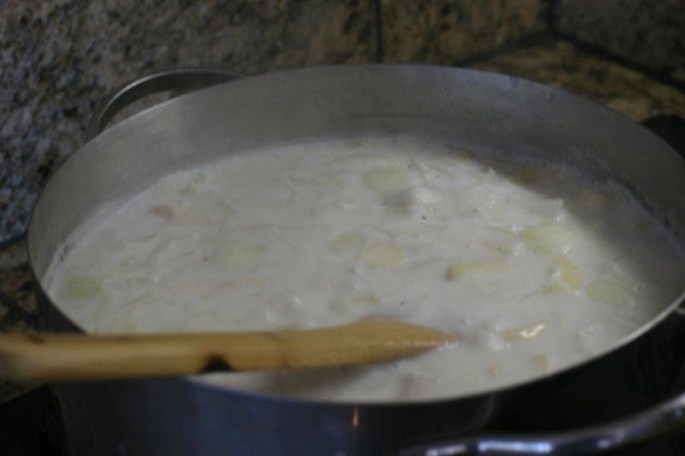
Potato Leek Soup

This is a super forgiving recipe that always works and can use up anything lurking in the back of the fridge, or veggie drawer.

  • 3 medium leeks (white part), rinsed and chopped
  • 3 or 4 potatoes, chopped
  • Butter or olive oil to saute the vegetables
  • One quart of vegetable or chicken stock, or water
  • Milk or cream
  • Salt, pepper and any herbs you like

Saute leeks and potatoes in oil until the leeks get soft. Add broth or water and cook until the potatoes are done, about 20 minutes. When the potatoes are done you can add some milk or cream to thin the soup to the consistency you like. Blend the soup with an immersion blender or in batches in the blender. I like to leave my soup a little chunky. I added some roasted chilies and some cheese to my soup this time. With the leftovers I might add some more diced vegetables like carrot and I think I have a kohlrabi leftover from last week that might find its way into the soup.

Potato Leek Soup

Comments Off on Potato Leek Soup

Mini Fall CSA Newsletter

Hello CSA Members.
This week we hope to bring you:

  • 1 butternut squash
  • 1 bunch carrots
  • 1 bag spinach OR 1 bag baby kale
  • 1 bunch Hakurei turnips OR 1 bunch beets 1# rutabagas OR 1# purple-top turnips
  • 1 c. watermelon radish

Large shares will get:

  • Beets AND turnips and
  • Spinach AND baby kale and
  • Radishes

Thanks to All
Posted by Mo

Thank you all who have hung in there with us for the last couple weeks. This has been a challenging year with the problems we had with diseases, heat, drought, and the water problems exacerbated by the heat and drought. Most years it’s hard to say goodbye to the season, but this year I am feeling OK that the season is ending. Phew. 2012 was one for the record books, and not all in a good way.

Here is to hoping for a great 2013. Garlic and spinach are already in the ground for next season!

We had a great farm crew this year. Many are off to new endeavors already. I want to wish you all happy trails and stop by and see us if you are in the Boulder area next year.

Storing Your Root Crops
Posted by Mo

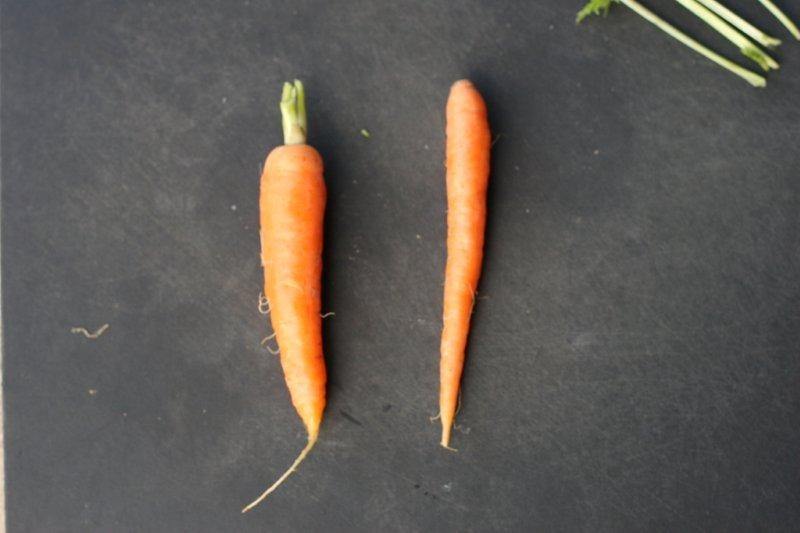
This week you will be getting quite a few root crops. The root vegetables will keep for a long, long time if you store them properly. If you cut off the greens of your root vegetables and put them in an airtight container or bag in your vegetable drawer, they will keep for at least 10 days. If you cut off all the greens and the tap root and put them in an airtight container in the vegetable drawer, they will keep for at least 6 weeks, maybe more.
In this first picture, the carrot on the left will keep for 10 days or so. The carrot on the right will keep for weeks.

The little roots and anything green is what gets slimy and goes bad first so you want to get rid of those for long storage.

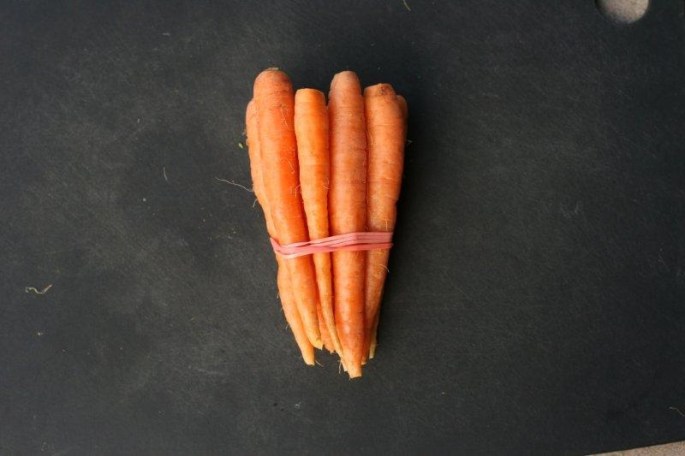
This is what a bunch of carrots prepped for long storage looks like before wrapping in plastic and going in the fridge.

Do the same with your beets, turnips, radishes, any root crop will keep for weeks if you take off all the greens and the tiny roots. I like to store my radishes and Hakurei turnips prepped like I did in the above pictures, then I put them in jars in the fridge so I can grab them for snacks.

Remember, we still have 3 more Saturday Farmer’s Markets so you can still get our great vegetables for a few more weeks even if CSA is over.

Thank you again and again and again for your support and enthusiasm.

Gratefully,
Mo McKenna

Posted in 2012, Newsletter | 3 Comments

Rutabagas and Mashed Root Vegetables

I am married to an Englishman. Two of my best friends are from Commonwealth countries, Scotland and Australia. One of the biggest food differences I see between the U.S. and Commonwealth countries are the use and acceptance of root crops. Here in the U.S. we are a more “potato on its own” country and our Commonwealth friends are more “throw any root crop together and it will be delicious” kind of people.

Let’s try the latter, shall we? This week we are getting beautiful potatoes, rutabagas and/or turnips. You can do anything with a rutabaga or turnip that you can do with a potato. Rutabagas might take a little longer to cook than potatoes and turnips, but only a little.
Rutabagas

Sometimes if I am peeling and cooking something I like to do a big batch for several meals during the week. I am going to peel and dice all my root crop vegetables in my CSA share this week. I will cook them and separate them for two different uses.

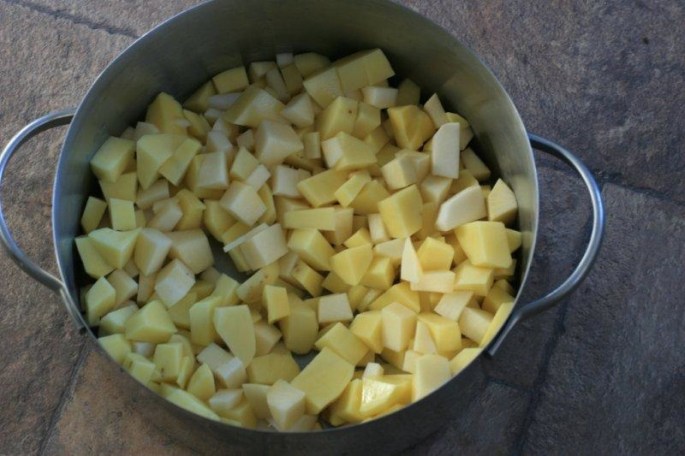
Here they are all peeled and chopped up. This will probably be enough for at least two dinners and probably two lunches for two of us.
Diced Roots
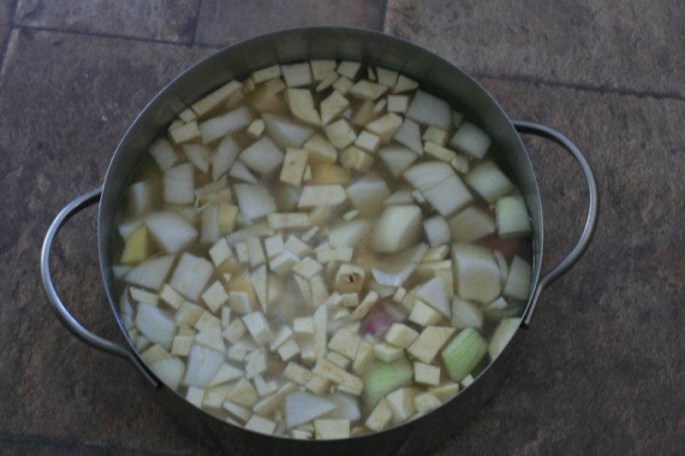
I had some chicken stock in the refrigerator. It wasn’t enough to cover the vegetables so I added some milk. You could do this with any kind of stock or water even. I added an onion and a few cloves of garlic (I wish I had leeks) and set this on to boil until all the vegetables are soft.
Boiled Roots
This is after an hour of gently boiling.
Well Cooked
I am going to let this cool a little and take half out for later this week and make a ‘mash’. I will just mash this like mashed potatoes. In England they call this a ‘mash-up’. I’ll save some of the cooking liquid with the vegetables for my mash up. The half left in the pan will be soup for tonight. I’ll probably hit the contents of the pan with an immersion blender but you could leave yours chunky.

Super easy and much more interesting than just potato soup or mashed potatoes by adding a few other root vegetables.

Have a great week.

Mo

Posted in 2012 | Tagged | Comments Off on Rutabagas and Mashed Root Vegetables

CSA Newsletter: Week 22 (October 15th, 2012)

Hello CSA members!

This week we hope to bring you one pie pumpkin, potatoes, winter radishes, onions, sunchokes OR Red Russian kale, carrots, and lettuce OR spinach. Large share members will receive lettuce AND spinach, as well as a butternut squash. The fruit share will be getting apples and possibly pears.

In this week’s newsletter:


Winter Keeper Boxes and Mini Fall CSA

Posted by Maddie

A lot of people have had questions about our Winter Keeper Boxes and the Mini Fall CSA. I have a little more information now than I did last week and I thought I would share it with you.

Winter keeper boxes will be available at all CSA pick-ups this week. (Check out Mo’s post below for a list of contents and storage instructions.) The cost of the keeper box is $70, which includes sales tax. If you are a biweekly member and are not regularly scheduled to pick up this week, you can still reserve a keeper box to pick up at your regular CSA pick-up time and location. Send me an email at csa@redwagonorganicfarm.com and I will be happy to reserve a box for you. You can pay when you pick up your keeper box with cash or a check.

We will also have winter keeper boxes available at our two farm stand locations: 95th & Arapahoe in Lafayette, and 7694 N 63rd Street in Longmont. Keeper boxes will be available at both farm stands until October 31st.

Pick-ups for the mini fall CSA will begin next week and will continue for two weeks. The cost of the mini fall CSA share will be about $24.50, which is the same as the regular season share. We will have a biweekly option available for the mini fall CSA. You will be able to sign up online for the mini fall CSA starting tomorrow. Look for an email from Amy tomorrow with sign-up instructions.

Thank you all for being a part of the Red Wagon community! I have really enjoyed seeing each of you at pick-up every week and I’m sad to see it come to an end. Thanks also to those who made it out for our harvest celebration yesterday. I couldn’t think of a better way to end the season.

– Maddie

Winter Keeper Boxes: Storage Instructions

Posted by Mo

Here’s what is in your winter keeper box this year:

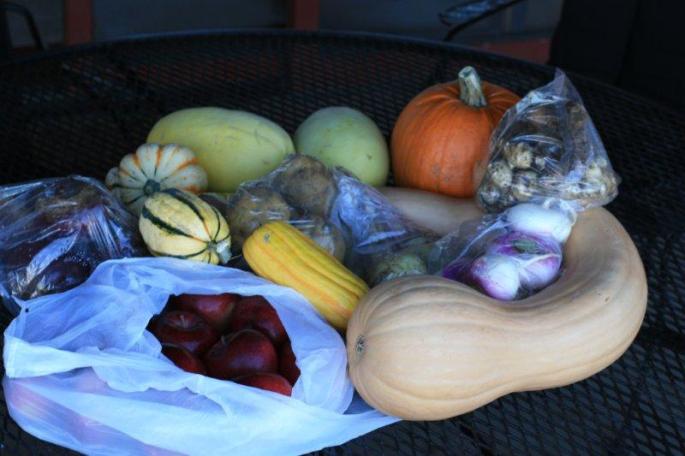
  • Squash & pie pumpkins (25 lbs)
  • Yukon Gold potatoes (5 lbs)
  • Beets (2 lbs)
  • Sunchokes (2 lbs)
  • Winter radishes (1 lbs)
  • Purple top turnips (5 turnips)
  • Apples (5 lbs)


Wow.

I wanted to talk a little about how to properly store the food you will get. All the root crops are already packed in plastic bags for you. That is how you want to store all of the root crops except the potatoes. If you are going to use the potatoes in the next week or two you can keep them in the plastic bag they came in and put them in the fridge, or on the counter if you put them in a paper or cloth bag. If you want to keep them 2 or more weeks you should put them in a paper or cloth bag and put them in the garage or a cool room in your house. If they start to dry up and shrivel, use them as soon as possible.

We have talked about keeping squash before. Keep them in a cool room or in the garage on a shelf. Don’t put them on the floor of the garage. They need to have air circulating around them. The area touching the garage floor will began to rot.

The apples you get will keep a long long time in plastic in the fridge.

You will notice that the root vegetables in the Keeper Box aren’t washed as well as you are used to getting. They store better minimally washed or not washed at all. You will have to do a little scrubbing before eating your sunchokes and potatoes, but keep in mind that they store better and longer that way.

If you have any questions shoot me an email at im@momckenna.com.

Thanks for a great CSA season. We say it all the time, but it can’t be said enough. We couldn’t do what we do without our CSA members.

I am so grateful for being a small part of this community.

Humbly,
Mo

Ending the Season with Gratitude

Posted by Amy

I wanted to express my gratitude to all of our CSA members. Farming is never easy, but some seasons are easier than others. This was one of those “other” seasons. In 2011 most of our crops did really well and we had a lot of food all season. I guess this year was the flip side of last year’s abundance. But as always, our CSA is what helped us get through the year.

We started the season with an exceptionally warm, dry spring. The snow pack in the mountains melted off quickly and we didn’t get our usual heavy snowfalls in the mountains in March and April. This means that all of our irrigation water went rushing by in the creeks in the spring and didn’t leave much water for later in the season. By the end of April we didn’t know if we would have enough water to make it through the season. Wyatt quickly (and painfully) rearranged our crop plan and cut some crops from his list. He was able to lease some water for our late summer and fall crops. And we got lucky and had some rain in the mountains over the summer. We feel very thankful that we didn’t have to watch our crops shrivel up and die in the fields due to lack of water!

This was also a difficult year with regards to pests and diseases. Our tomato, pumpkin, and winter squash crops were at least 80% failures. Our tomato plants were heavily damaged by tomato wilt virus, which is caused by tiny insects that float on air currents. Almost all of our tomatoes went to our CSA members and even then, we had to give “seconds” tomatoes a lot of the time.

We also had problems with squash beetles. We planted winter squash and pumpkin plants in June, but as soon as the plants got a few inches tall, the squash beetles attacked the plants and killed them. We replanted the squash and pumpkins 3 times, but the end result was a very small crop.

On a personal note, I have been dealing with a chronic illness, which has limited my ability to work. I’ve really missed seeing all of you at the CSA pickups and at the farmers’ market! I’m hopeful that some more rest this winter will help to restore my health.

We are very thankful that we had a great crew to get us through a hard season. They worked through a lot of scorching hot weeks over the summer and kept planting, irrigating, and harvesting to make sure we had enough food.

And as always, we are so thankful for our CSA members. I got to see some of you yesterday at our CSA Harvest Celebration. There were 4 families at the party who have been members since we started our CSA back in 2007. I feel so honored to have the many members who have been with us year after year. Our CSA members are really the foundation of our farm. I could go on and on about the ways our CSA supports Red Wagon. From a business perspective, our CSA is our most stable and reliable source of income. We know at the beginning of the year how much CSA income we have and how much food to grow. We also don’t have to worry about rainy weather with the CSA, like we do with the farmers’ market. There is nothing like having the crew spend hours harvesting vegetables, only to have the vegetables sit on our table at the farmers’ market in a downpour without a customer in sight. And it has been so nice to get to know many of you over the years and share our successes and failures with you. I really need to spend some time writing more about the ways our CSA members support our farm because I am certain that you don’t know many of the ways you help us. But I’ve already gone on too long here. So for now I will just say, with sincerest gratitude, thank you. We really could not do it without you.

Amy

Harvest Celebration Photos

Posted by Mo

Photographs by Mo McKenna and Anna Mayer

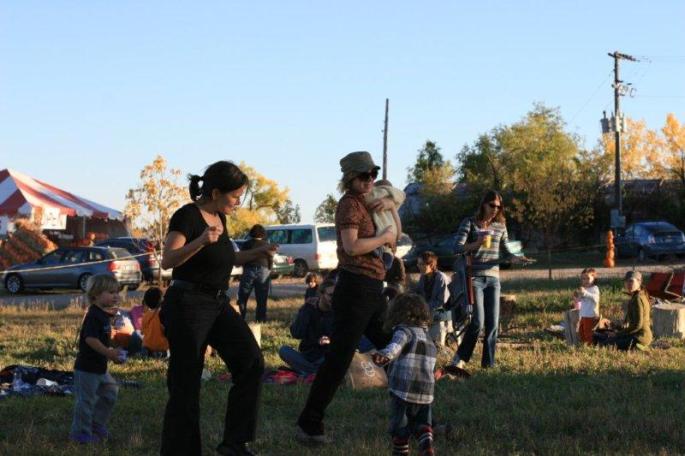
It was great to see so many people at the farm yesterday for the Harvest Celebration. It was fun to see so many of you use the fruit and vegetables you got from your CSA shares in the dishes you brought.

Clay and Jake work at Red Wagon and played some music for us yesterday, along with some friends. Thanks guys! It was really fun.

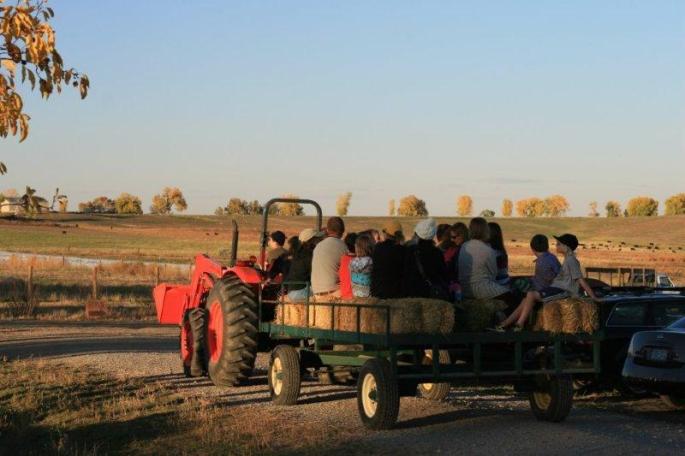
Hay rides with Sally, Wyatt and Amy were really popular.

In general I think everyone had a really good time.

Posted in 2012, Newsletter | Tagged , , | Comments Off on CSA Newsletter: Week 22 (October 15th, 2012)

CSA Newsletter: Week 21 (October 8th, 2012)

Hello CSA members!

This week we hope to bring you butternut squash, potatoes, shallots OR red onions, cauliflower OR broccoli, watermelon radishes, and baby chard OR lettuce. Large share members will receive baby chard AND lettuce, carrots, and garlic. Fruit share members will receive apples.

In this week’s newsletter:


Harvest Celebration THIS SUNDAY!

Posted by Maddie

It’s hard to believe the end of the CSA season is almost here! It feels like just yesterday that we were bringing you pints of strawberries and sugar snap peas.

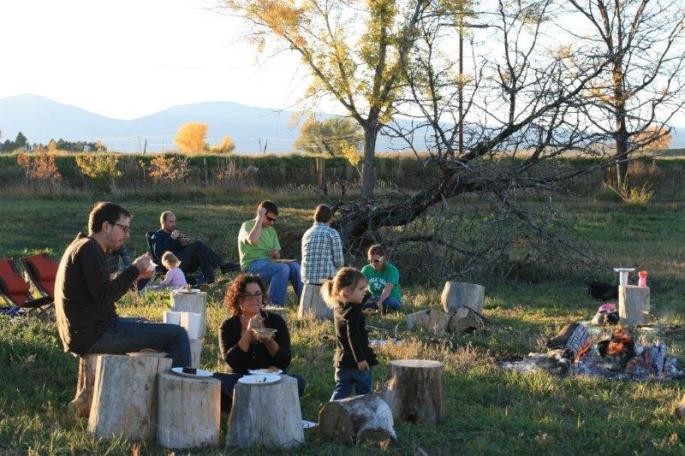
In order to celebrate another wonderful season and to thank our CSA members for making it possible, Red Wagon will be hosting our 2nd annual harvest party this coming Sunday!

Come and walk around the pumpkin patch, take a hayride around the farm, enjoy live music and help us bid a fond farewell to the 2012 season! The celebration will be a potluck, so please bring a dish to share. Red Wagon made veggie chili and will be providing beer. The kids can make a s’more by the campfire, meet our goats, llamas, and alpacas, and explore the straw bale maze!

Date: Sunday, October 14th
Time: 3:00pm-8:00pm
Location: Red Wagon’s 63rd St. Farm and Pumpkin Patch
(7694 N 63rd St. Longmont, CO 80503)

Bring:

  • a dish to share as this is a potluck. We will try to eat between 4 and 6pm.
  • a chair or blanket to sit on.
  • something warm to wear! It gets cold quickly as the sun goes down.
  • We will have plates and utensils, but you can help us reduce waste by bringing your own!
  • Please no dogs.

I hope everyone can make it! Have a great week and I’ll see you at pick-up.

– Maddie

Let’s Talk About Shallots

Posted by Mo

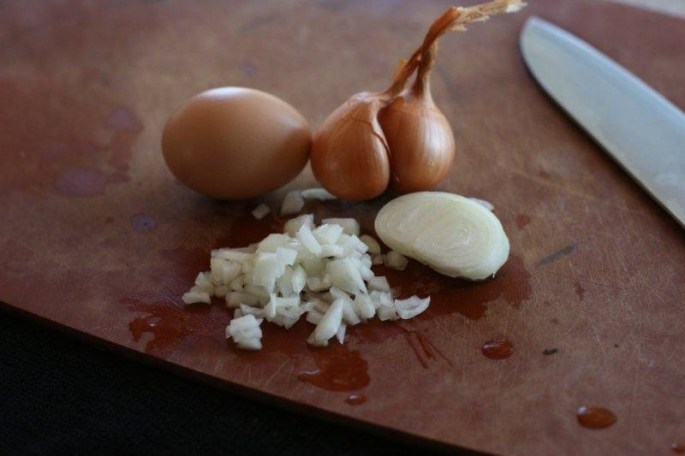
Shallots aren’t little onions. They are more closely related to garlic and potato onions. Their taste is milder than onions in terms of bite or ‘hot,’ but shallots are more complex and flavorful. Shallots will store for a long, long, long time. The shallots you get this week will keep until at least January or February if not longer.

In most recipes, you can interchange shallots and onions. If I want a more refined or complex flavor (or especially if I want to layer flavors) I will use shallots alone or in tandem with other alliums. One of the best attributes of a shallot is that it melts into the dishes where it is used. The cell walls collapse, leaving only flavor and no crunch.

I think the flesh even looks more refined than an onion. This is an average sized shallot. I put the egg in there for reference. Small or large shallots don’t affect flavor or storage. They are all really good.


Squash Yield

Posted by Mo

This week you are getting butternut squash. I would say butternut is the quintessential winter squash here in America. They are easy to cut, peel, cube, and bake. They usually aren’t too big and the flesh is nutty, mildly sweet, and a beautiful orange color.

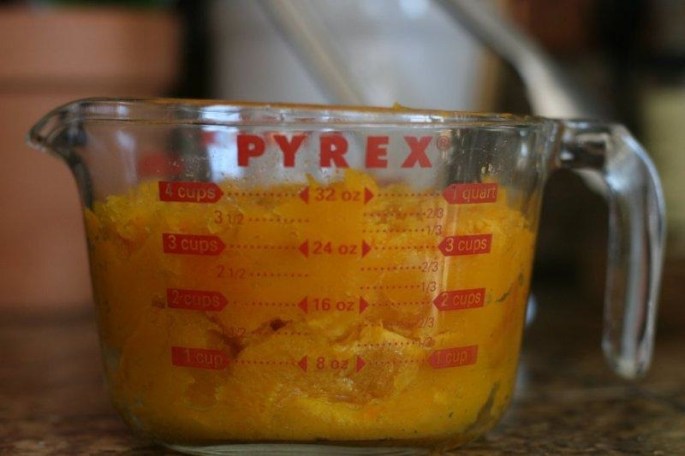
This butternut squash weighed 3 1/2 pounds. I have found that the weight in pounds of winter squash and pumpkins correlate very closely to cups yielded, meaning a 3 1/2 pound squash or pumpkin will yield about 3 1/2 cups of cooked flesh. Let’s see.

Yep. If I smooshed it down, I think it would be almost exactly 3 1/2 cups. I thought this info might be useful to some of you.

Butternut Squash Ravioli
Yield: about 30 triangle ravioli

I am calling them butternut squash ravioli but you can use any squash you like to make these.

For the filling:

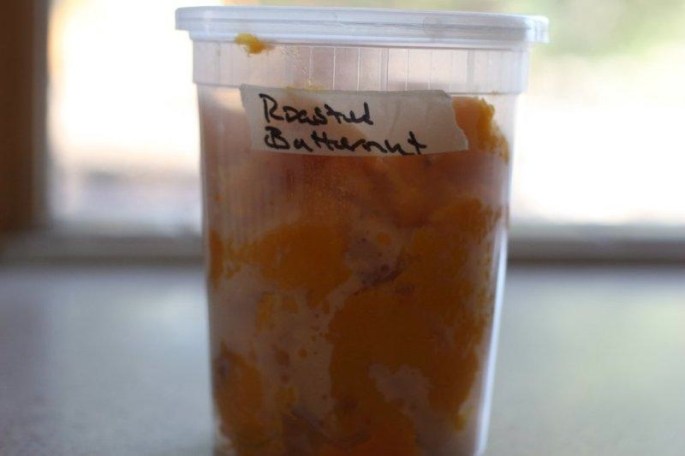
  • 1 cup cooked squash (I roasted mine)
  • 1 shallot, chopped
  • sage leaves, chopped
  • 1 tablespoon unsalted butter
  • 1 or 2 ounces goat cheese

For the ravioli:

  • won ton wrappers
  • 1-2 egg whites

Heat the butter in a skillet. Add the shallot until it is softened, then add the sage, cooked squash and goat cheese. Cook until it is all really well incorporated.

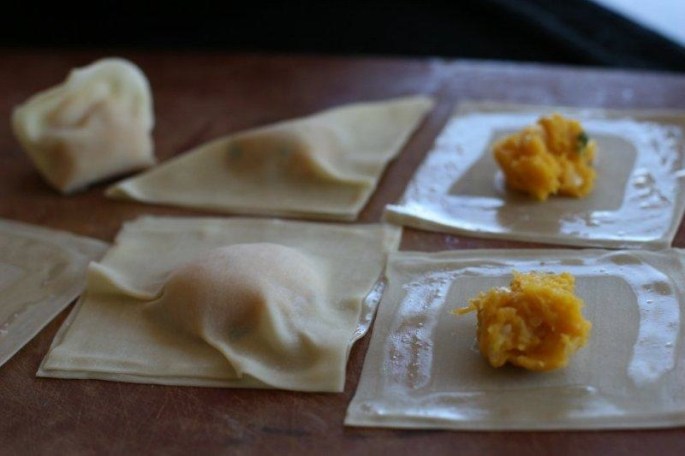
Lay won ton wrappers out on your work surface and paint egg white around the edges of the wrappers. Spoon about 2 teaspoons of squash filling on the won ton wrapper. You can either put another wrapper on top and seal, or fold in a triangle and seal. The egg white will seal the wrapper to itself.

I made one ravioli with one wrapper on top of another and the rest I folded in a triangle. I think the triangle is easier and a better size to eat.

You can freeze the ravioli at this point and pull out what you need later. I like to use these on salads with kale or spinach, or in soups like minestrone. You can also use them for a really rich starter. They only need to be boiled for 2 or 3 minutes so be careful not to overcook them.

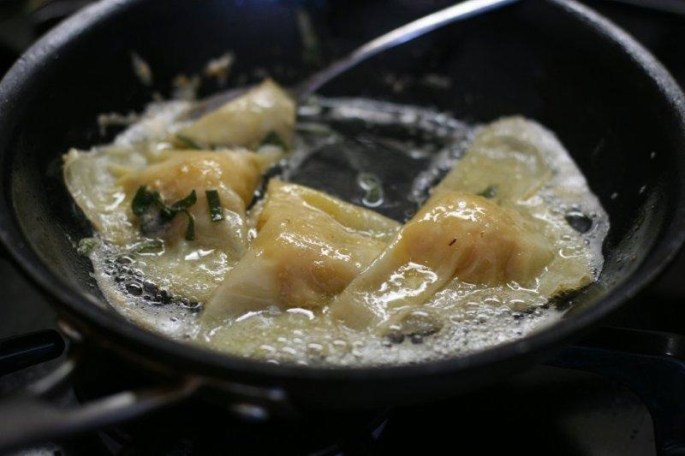
Boil as many as you need. While they are boiling, brown some butter and more sage in a pan. When they are cooked, drain and quickly saute the ravioli in the butter and sage. You don’t need to cook them any more, just coat the ravioli with the butter and sage and drain them a little before serving.

You can refrigerate the rest of the squash for up to a week or freeze it for two or three months.

There are hundreds and hundreds of recipes using roasted squash. Let us know what you are making with yours!

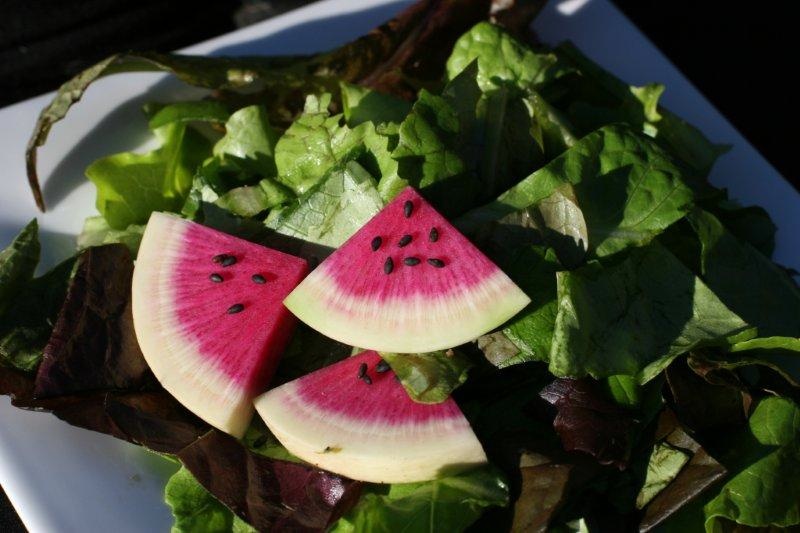
Watermelon Radishes

I get asked all the time what I do with watermelon radishes.

I have fun.

Have a great week and cook something fun.

– Mo

Posted in 2012, Newsletter | Tagged , | Comments Off on CSA Newsletter: Week 21 (October 8th, 2012)

CSA Newsletter: Week 20 (October 1st, 2012)

Hello CSA members!

This week we hope to bring you spaghetti squash, cabbage OR sunchokes, cauliflower OR baby chard, roasted chilies OR roasted sweet peppers, and Red Russian kale OR broccoli raab. Large share members will get cauliflower AND baby chard as well as spinach. Fruit share members will be getting pears and apples.

In this week’s newsletter:


Spaghetti Squash
Posted by Mo

Week 20, is that right? Whoosh, there went Summer.

This week you are getting spaghetti squash. Spaghetti squash will store for a long, long time. They are very bland so you need to add some good flavors and textures to any dish using spaghetti squash.

I hear some people say that they are intimidated by cutting winter squash in half in order to bake them. I have read that you can microwave winter squash for 5 to 10 minutes, making them easier to cut, then proceed with baking. I had never tried that, so I did.
I poked some holes in the spaghetti squash so it wouldn’t blow up in the microwave.

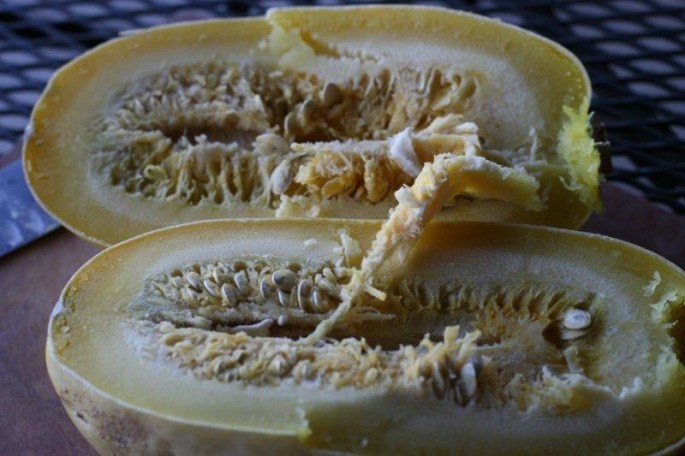
I microwaved it for a total of 10 minutes. After 5 minutes I turned it over and cooked it another 5 minutes. This is what it looked like after 10 minutes of microwaving. You can see how it is partially cooked, but very raw in the middle. While I was microwaving it I preheated the oven to 400°F. After doing this I am positive it will work with any winter squash.

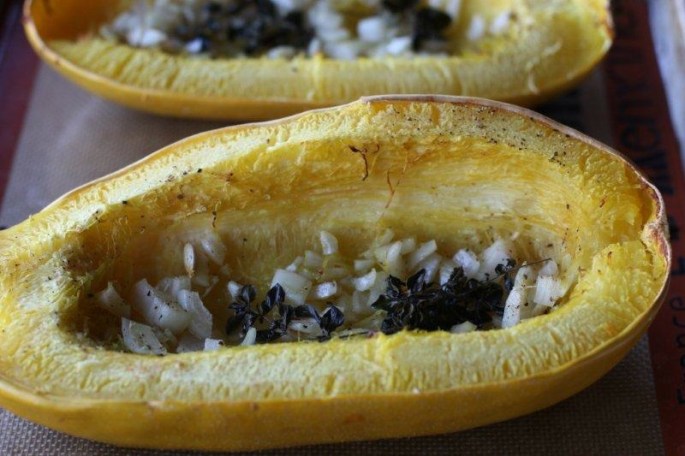
I scooped out the seeds and added some onions, herbs, salt and pepper. I rubbed all that with olive oil and put it in the 400°F oven for about 35 minutes.

Spaghetti squash are the ultimate in stringy squash. To optimize the stringy ‘spaghettiness’ of the squash you want to dry it out a bit so bake it uncovered, cut side up the whole cooking time.

See the meat of the squash pulling away from the squash shell? That is how you know it’s done.

Discard the herbs if you used them and use a fork to fluff up the squash to make it look like spaghetti. Don’t stir it or smash it. Try to keep it fluffed up.

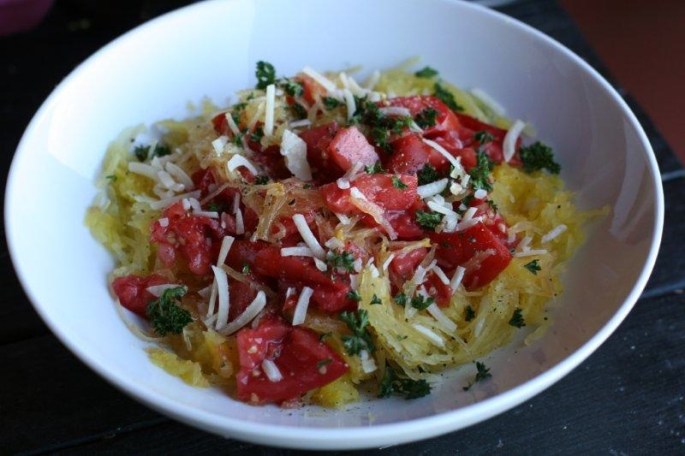
My very favorite thing to do with spaghetti squash is to cut up one of my last very ripe tomatoes and add a little olive oil, parsley and Parmesan cheese. This dish tells me that summer is well and truly over. What a great goodbye.


Jerusalem Artichokes
We have been offering Jerusalem artichokes in our CSA for years now, so many of you love them and look forward to getting them. This is some information for those of you who may be less familiar with them.

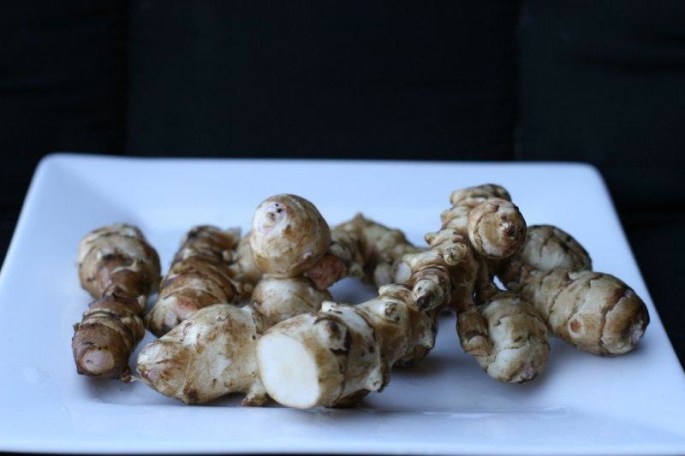
Jerusalem artichokes (also called sunchokes) are tubers belonging to the daisy family. The plant looks like an enormous sunflower plant. We dig up the roots to eat, much like potatoes. I don’t want to get into a health discussion here, but if you are interested you should look up the health factors of this tuber, especially if you eat it raw. It has some very unique health benefits.

You can use Jerusalem artichokes in pretty much the same way you would use a potato. Specifically, use it like you would a new potato because you don’t need to peel these. They are washed and ready to use.

They look a little like ginger root don’t they?

You can roast these, bake them, incorporate them in a root vegetable mash-up, or make a soup or a salad. Anything that you would make with a potato, you can make with these. I think they are fun to cook with because your brain thinks it is going to taste like a potato but you get a unique flavor and texture.

I pan roasted some with onions, mushrooms and a little garlic.

They have a very interesting nutty taste and a pleasant crunch that potatoes lose when cooked. Because they are so flavorful with such a nice texture, they work well to compliment a less flavorful, unique textured counterpart…like spaghetti squash.

Have a great week and I hope you try something new.

– Mo

Guest Recipes

Posted by Maddie

We have a very food-filled newsletter for you this week! Thanks Mo for your great ideas, as always. Today I thought I would also share some recipes with you that I’ve collected from CSA members in the last week or so. Unfortunately the timing on two of these is a little off, since they contain mostly summer veggies like tomatoes and zucchini. However, if you happen to still have any of these ingredients hanging around, either from your CSA share or from your garden, I highly recommend trying out one or all of these recipes.

I’m off tomorrow on a short trip back to Vermont so I won’t be seeing all of you at pick-up this week, but I hope everyone has a wonderful first week of October! Enjoy those veggies.

– Maddie


Summer Vegetable Caponata

Submitted by Jessica Hersh

  • 1/2 cup extra virgin olive oil
  • 1 Tbs brown sugar
  • 1/2 cup balsamic vinegar
  • 3 lbs summer vegetables (eggplant, zucchini, peppers, yellow squash, green beans)
  • 1 medium or 2 small onions
  • 3-5 cloves of garlic
  • 1 large can small diced tomatoes in juice or 2 lbs fresh tomatoes, peeled and diced
  • 2-3 Tbs capers
  • black pepper
  • salt

Prepare the eggplant, zucchini, and yellow squash as follows: wash, trim, and cut into small bite-sized pieces. Peel the onion and dice it. Peel the garlic and cut into thin slices. Put the oil, sugar, and balsamic vinegar into a heavy-bottomed pot and heat over medium high until bubbly. Add the eggplant and onion and cook for a few minutes, stirring occasionally to prevent sticking and burning. Add the rest of the vegetables (including tomatoes and garlic.) Add capers. Stir well, turn heat down to low and cover the pot.

If the mix seems very dry add half a cup of water – you want to allow this dish to stew for hours without drying out. Cook over low heat for at least 2 hours, checking water content and stirring every 10 minutes or so. When the dish is fully cooked, all the vegetables should be very soft and falling apart and it should be thick, not soupy. At this point, remove it from the heat. Add salt and pepper to taste. Serve hot or allow to cool and serve cold. You can eat this as a salad, a side dish, an omelet filling, tossed with pasta, topping a frittata, as a dip for chips or bread, as a crostini topping, a sandwich filling, or just a dip-the-spoon in snack.
Enjoy!


Curried Apple and Potato Kugel

Submitted by Jessica Hersh

  • 3 lbs potatoes (either red or yellow)
  • 2 lbs apples (something with nice flavor and crisp texture (like honeycrisp or granny smith)
  • 2 medium onions
  • 2 Tbs curry powder
  • 2 tsp salt
  • 1 cup flour
  • 6 eggs
  • 1/4 cup neutral oil (safflower or sunflower)

Preheat oven to 375°F. Wash the potatoes and apples well and peel the onions. Grate them all, starting with onions and rotating (this will keep the potatoes from oxidizing and turning brown.) Mix the shredded vegetables and fruit together with the flour, eggs, curry powder, and salt. Put the oil in a baking dish (Pyrex works great for this) and put in the hot oven for 5 minutes. Remove the pan from the oven and put the kugel mix in the hot oil in the pan. Spread evenly then bake for 45 minutes to an hour until the edges and top are nicely browned. Cut into pieces and serve hot. This is great plain or topped with plain yogurt.


Tomato Soup

Submitted by Kate Martin

  • 1 large onion, chopped
  • 2 cloves garlic, chopped
  • 1 1/2 Tbs butter
  • 1 Tbs olive oil
  • 2 tsp. each dried thyme and dried basil
  • 3 Tbs tomato paste
  • 3 lbs. fresh ripe tomatoes, peeled, seeded and chopped
  • salt and pepper to taste
  • 4 cups chicken broth

Saute onion and garlic in butter and olive oil. Add spices, tomato paste, salt, pepper and tomatoes. Cook for 10 minutes. Add broth. Cover slightly and simmer 30 minutes more. Puree in a blender, food processor, or using an immersion blender. This recipe freezes great and is a perfect dish to pull out on a cool fall evening.

Posted in 2012, Newsletter | Tagged , , | 1 Comment

CSA Newsletter: Week 19 (September 24th, 2012)

Hello CSA members!

This week we hope to bring you Delicata squash, German Butterball potatoes, beets OR turnips, beans, jalapenos OR parsley OR onions, and lettuce OR roasted sweet peppers. Large share members will be getting lettuce AND roasted sweet peppers, broccoli, and shallots. Fruit share members will get Alkmene apples and Gala apples.

In this week’s newsletter:


Potato Success

Posted by Maddie

In my eyes, this year’s Cinderella story at Red Wagon has definitely been the potato crop. I’ll be honest, when we planted potatoes in the field back in May I did not have high hopes. The farm crew that day spent hours planting row after row of potatoes in soil that looked more like a lava field than fertile earth. I remember my skepticism well. With every seed potato I wiggled into the rocky ground, I thought, “Good luck down there, little fella.” More experienced farmers assured me they would probably do just fine.

Looking back, I wish I had thought to take some pictures on planting day. Last week I had the chance to harvest some of our stubborn little spuds for the first time and did they ever prove me wrong.

Javier got us started by tilling up two rows of potato plants with the tractor. The row on the left in this picture shows what the tops of the plants look like when the potatoes are ready. You can see potatoes tumbling out of the ground in the newly dug row in the center.

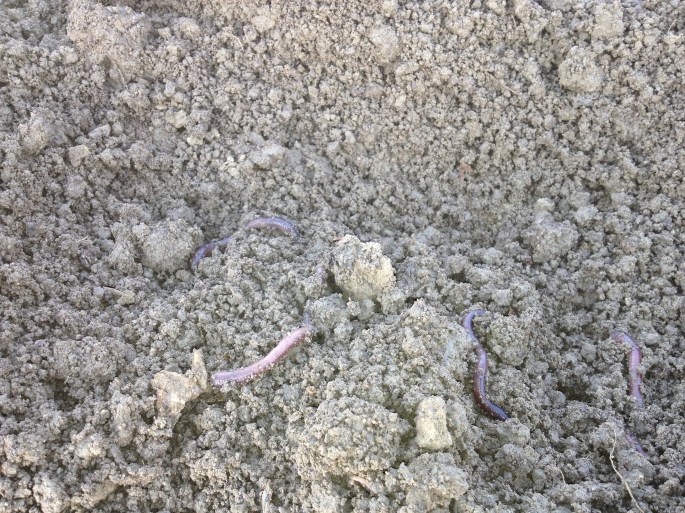
The tractor pulls the plants out of the ground and we follow behind, digging the potatoes out of the now beautiful soil, teeming with earthworms.

Pulling potatoes makes me feel like a little kid. There you are on your knees, digging around looking for buried treasure with your shoes and fingernails full of dirt. And then the occasional earthworm or roly-poly squiggles out to greet you. I recommend that everyone try it at least once.

Pumpkin Patch Now Open!

Posted by Maddie

We have been busy on the farm getting our pumpkin patch set up. The leaves on the pumpkin plants are dying back and revealing thousands of beautiful orange pumpkins. The straw bale maze is complete and ready for adventure!

Our pumpkin patch is located at the 7694 N 63rd Street, off the Diagonal highway in Longmont. Come visit us! We will be open from 10am-6pm every day now through October 31st.


Roasted Red Pepper Sauce

Posted by Mo

You have a choice of roasted red peppers today. These are a very sweet pepper called Carmen. Roasting them brings out even more sweetness and complex flavors. To prepare these you simply need to rinse off most of the charred peel and seed and devein them.

You can put some olive oil and a little balsamic vinegar on these peppers and essentially you will have what you get a Whole Foods olive bar or buy in jars that you would pay big bucks for.

I like to use these on grilled cheese sandwiches. But I really love roasted red pepper sauce.
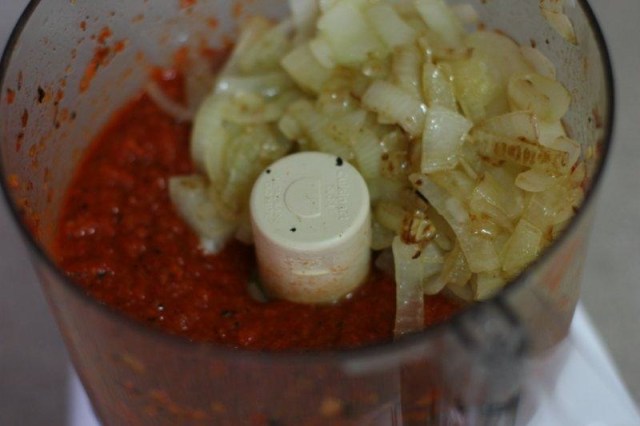
Roasted red pepper sauce is almost as easy as making pesto. Seed and devein your peppers as above and take the peppers for a spin in your Cuisinart or blender.

Add some onions and garlic sauteed in olive oil.

And take that for a spin. If you are going to eat it right away you can add a splash of cream or 1/2 & 1/2 and some Parmesan cheese. Use this like you would pesto, on pasta or bread as a spread or to compliment some grilled vegetables or meat.

I wanted to save mine for winter eats so I am going to freeze it at this point and add cream when I use it.

Yeah. I love putting some things away for winter.


Roasted Delicata Squash Salad

Posted by Mo

This week you are getting delicata squash.

Delicata will store for up to 3 months so don’t feel like you have to use it right away. Keep it in the garage or an unheated room and it will be fine.

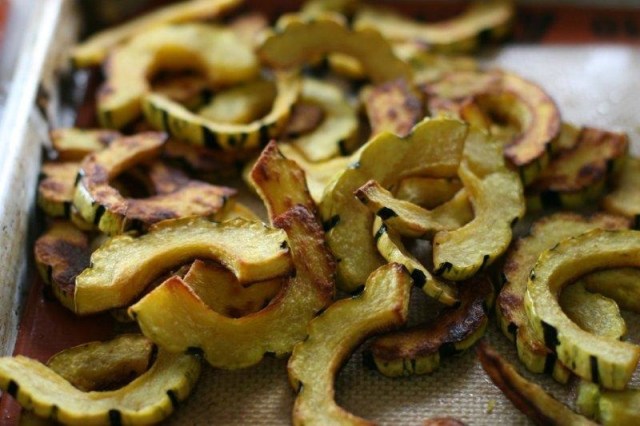
Delicata are one of a few winter squash that you don’t need to peel. The flesh and peel are firm with a nutty flavor. I like to roast them in smaller pieces to get more caramelized areas, but you can also just cut it in half and roast it like you would an acorn squash. Delicatas are nice stuffed with grains or vegetables and roasted, too.

I want to show you one of my favorite winter salads. This is a good way to use up anything you have in your refrigerator.

Delicata squash work really well with this salad because the flesh is so firm when it is cooked and can hold up to being tossed with vinaigrette and mixed with other ingredients.
Cut up your squash, removing the seeds and stringy pulp.  Drizzle the slices with olive oil, salt, and pepper and roast in a hot 400˚F oven.


Roast the bejeezes out of it, about 40 minutes. You want these really done, almost dry.


Put the cooked squash in a bowl and chop up any vegetables that you have on hand. Make sure you add some sort of onion and some crunchy stuff like celery or peppers. The contrast of soft and crunchy is nice. I wish I had some hard cooked eggs to add here.

I drizzled this with a Dijon vinaigrette but any dressing will do. Mine was 2 teaspoons Dijon, 2 tablespoons of cider vinegar and 3 tablespoons of olive oil. I tossed it all and served it on some lettuce. This is also great on grains or rice. The leftovers are so good too. The flavors meld so make lots. You will want more than one meal out of this.

Enjoy this cool weather and being able to turn on the oven without dying of heat.
Until next week.

– Mo

Posted in 2012, Newsletter | Tagged , , , , | Comments Off on CSA Newsletter: Week 19 (September 24th, 2012)

CSA Newsletter: Week 18 (September 17th, 2012)

Hello CSA members!

This week we hope to bring you one acorn squash, Italian eggplant, beans, green peppers OR roasted chilies, red tomatoes OR seconds tomatoes, and arugula OR spicy salad mix. Large share members will also receive garlic, Hakurei turnips, and pea shoots. Fruit share members will receive Honeycrisp apples, Gala apples, and pears.

In this week’s newsletter:


Harvest Celebration Coming Up!

Mark your calendars for our second annual Harvest Celebration!

  • Where: Red Wagon’s 63rd Street Farm
  • When: Sunday, October 14th from 3pm-8pm
  • More details to come!

We have recently started preparing for our end-0f-season CSA celebration. The Harvest Celebration this year will include a potluck dinner (please bring an entree, side dish or dessert to share!), walking tours of the farm, hayrides, pumpkin painting, a straw bale maze, visits with the animals, an evening bonfire (provided there is no fire ban), and more!

Mo is already busy preparing vegetarian chili and we will be providing beer and non-alcoholic beverages. It should be a great time and I hope to see everyone there!

– Maddie


63rd Street Happenings

Posted by Maddie

I hope everyone’s week is off to a great start. If you haven’t had a chance, be sure to stop by our new farm stand in Longmont at the corner of Oxford Road and North 63rd Street. Visiting the farm stand is a great way to get a peak at the farm where we are growing most of your late summer veggies as well as fall crops like pumpkins and winter squash. The farm stand is open from 10am to 6pm every day and is a great place to pick up anything you may not receive in your CSA share like corn and peaches or other fruit.

When you stop by, ask the folks at the farm stand for some old corn or other treats to feed the animals. Our goats, llamas and alpacas love visitors!

Photo Credit: Blair Bost

It has been amazing to see the variety of crops we have growing on the farm all at once. Last Friday, while I was picking zucchini and cucumbers (yes, we still have these!) I noticed that our pumpkins are really starting to look ready. Amy says that the pumpkin patch at 63rd Street will be opening in the next week or so, so stay tuned!

______________________________________________________________

Making Chili for the End-of-Season CSA Party

Posted by Mo

Mark your calendars for the second annual Red Wagon End of Season CSA Party. Last year we made a big batch of vegetarian chili from our farm vegetables to share with our CSA members. It was a big hit so we decided to do that again. We could get a freeze any night now so last week I started to gather frost-sensitive food for the chili I want to make for you.

I got a couple of boxes of seconds tomatoes.

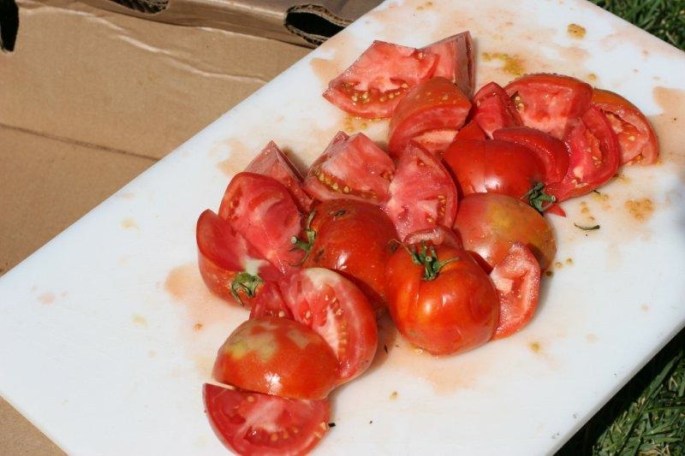
I need to freeze most of the food because the party isn’t for a few weeks. I have a machine that separates the skin and seeds of the tomatoes and just leaves the pulp. I don’t even need to core the tomatoes, so I got through two boxes pretty quickly. I’ll put the pulp in big Ziploc bags and freeze them.


This is what it separates out and I discard.


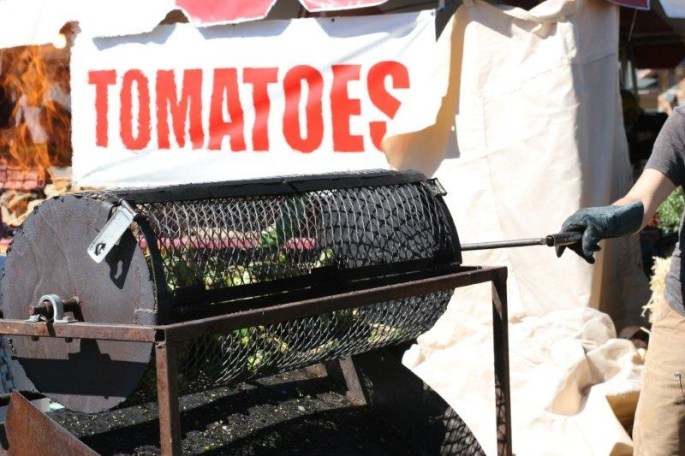
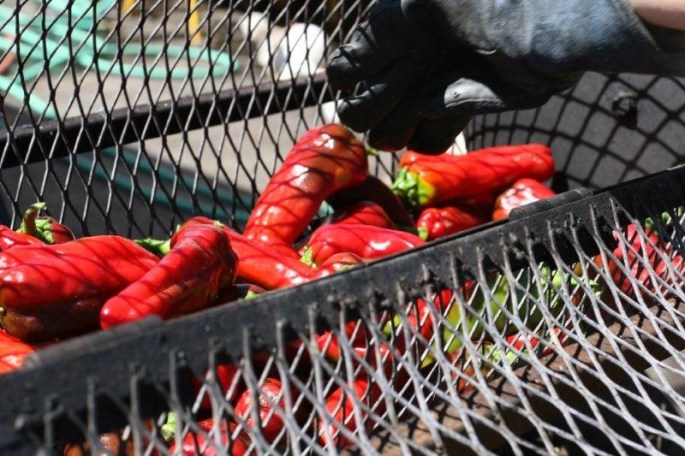
I went to the Farm Stand and had Lauren roast some Anaheim peppers. I separated the charred skin and seeds and chopped the peppers. These are in the freezer with the tomatoes now.

I thought roasted sweet peppers would be great in the chili too, these are about to be roasted.

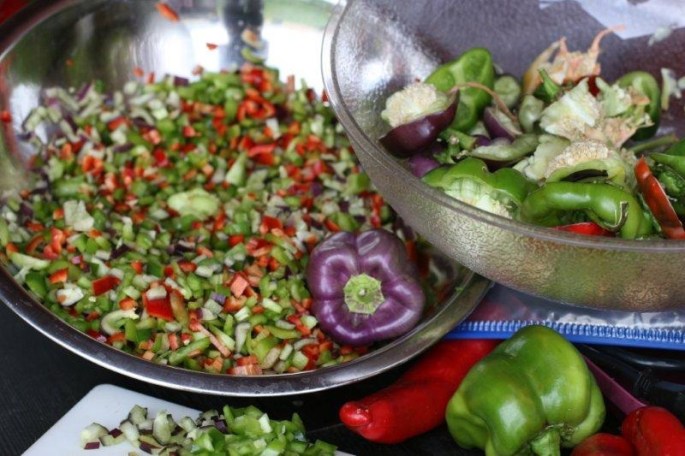
Then I diced up some different color bell peppers and froze them.

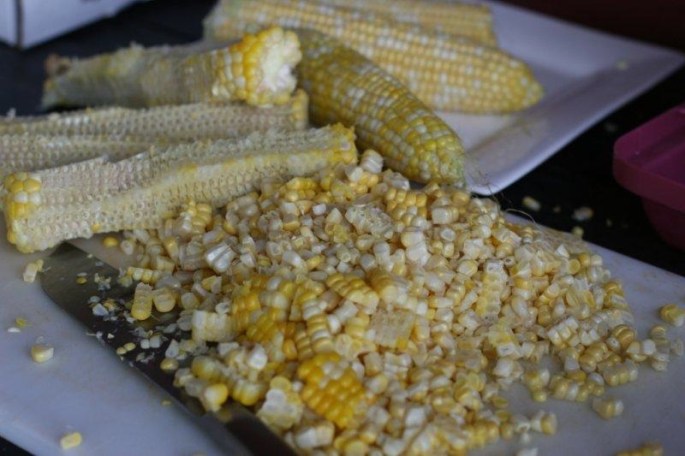
I blanched some corn and removed the kernels and froze it too. I think this will look really pretty with the peppers in the chili. I can’t decide if I am going to make black beans or mixed bean chili yet.

Phew. That’s done.


Winter Squash 101

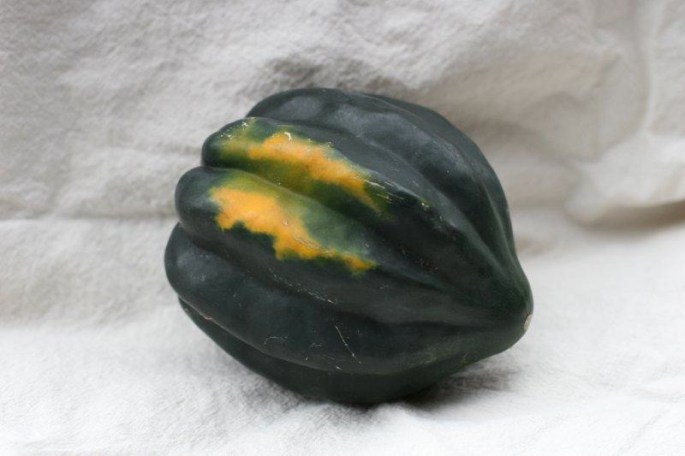
I love winter squash. Love, love, love it. I love it all, the gnarliest Calabazas, the sweetest Delicatas,  the formidable Hubbards, to the humblest acorn.

That yellow spot was where the squash was sitting on the soil in the field. We lift up the squash to see if there is a yellow spot. If there is, the squash is ready to harvest.

All winter squash except acorn, delicata, and sweet dumpling benefit from a curing time. Curing is simply keeping the squash at room temperature, around 70˚F to 75˚F for 10 to 20 days. After that the squash will keep for months at around 50˚F to 55˚F. Pretty much if you keep your squash in the garage or an unheated room,it will be ok. The weather in the fall naturally takes care of the curing temperatures and time. So, any squash you get from us will keep for months if you put it in your garage or a cool room. Don’t keep your squash on the counter or in the refrigerator. Too warm and too cool.

The basic cooking of any winter squash is about the same. Baking time will depend on the size of your squash, so keep that in mind.
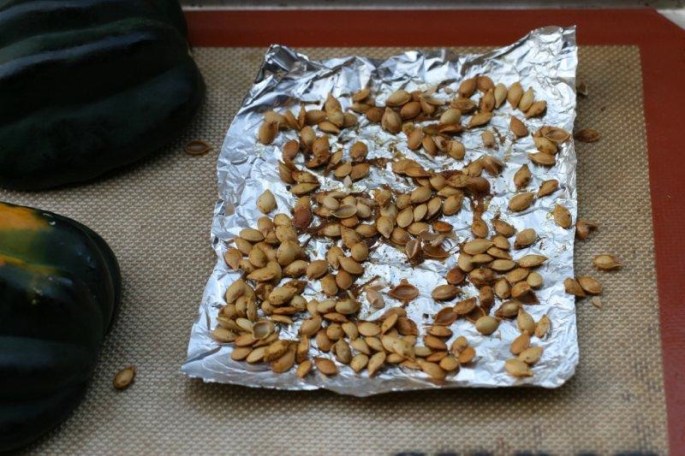
Preheat your oven to 375˚F. Cut your squash in half and clean out the seeds and any stringy membranes. I always save the seeds to roast alongside my squash. Just rinse the seeds off and separate the membranes and discard the stringy stuff.


I put a little olive oil and salt and pepper on the seeds and maybe some curry powder or another seasoning.
I put the seeds on a little piece of foil because the seeds will get done before the squash and it makes it easier to remove from a hot pan.

Put your squash cut side down, with your seeds in the hot oven and set the timer for 20 minutes.
The seeds will be done after 20 minutes but your squash will need longer.

Take the seeds out and turn your squash cut side up and you can brush it with butter or oil and add honey or sugar at this point. I used about a tablespoon of butter and the same amount of honey.

Back in the oven for 35 or 40 minutes. Big squash might take longer. Here it is done.

Now, you can serve it like this. Scoop out the flesh and use it in any recipe calling for cooked squash, or freeze it for later. Stuff it with grains or vegetables. This is a starting point. Have fun with it.

Until next week.
-Mo

Posted in 2012, Newsletter | Tagged , , | 1 Comment

CSA Newsletter: Week 17 (September 10th, 2012)

Hello CSA members!

This week we hope to bring you potatoes, onions, beans OR broccoli, red tomatoes OR seconds tomatoes, peppers, and arugula OR spicy salad mix. Large share members will also get cherry tomatoes, beets, and double potatoes. Fruit share members will be getting apples and pears.

In this week’s newsletter:


Approaching Fall

Posted by Maddie

Believe it or not, fall is beginning to poke its nosy little head up through the soil these days. On the farm, the return of cooler weather and the crops that come with it are giving me flashbacks of early spring. Megan and I spent a few cool, overcast hours on Friday harvesting arugula, spicy salad mix and easter egg radishes, all the while commenting on the twilight-zone feel of a day not steadily climbing into the 90s.

While a lot of our young crops this time of year are reminiscent of spring, we also have some true fall and winter crops coming on. Our winter radishes and rutabagas are working hard to expand their tiny little roots in the ground. If you attended our farm tour yesterday, you probably were able to get a little sneak-preview of these. Another up-and-comer that some folks saw on yesterday’s tour are the Brussels sprouts. More on those to come I’m sure, and I for one am super excited for the Brussels. The way they grow is like almost nothing else, and despite what your neighborhood 6-year-old will tell you, they taste incredible when prepared well.

All in all, there’s a lot to love about this time of year and I’m really looking forward to what fall will bring on the farm. True Vermonter that I am, I plan to start cooking all of my veggies with a splash (or a pint) of maple syrup here shortly. I’ll let you know what I come up with.


Dilly Beans

Posted by Maddie

I finally got around to doing some canning this weekend. For months I have been meaning to get my hands on some pickling cucumbers and dill, but it seems that the peak of our cucumber harvest was way back in July, while our dill crop has just peaked in the last week or two. The good news is, our newest planting of green beans is timed just about perfectly for making the best snack ever: dilly beans! If you are a fan of pickled things, I highly recommend these. They are quick to make (if you don’t count the 6 weeks or so that they sit untouched in their jars) and super tasty.
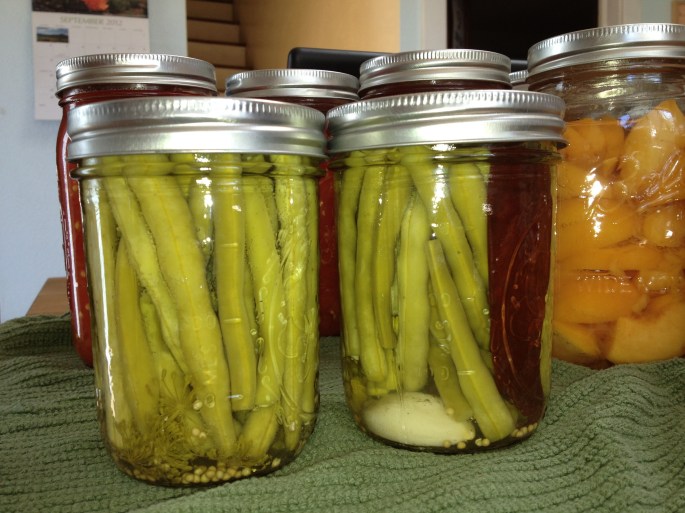
Here is the recipe I used, which is adapted from Sandor Katz’ book Wild Fermentation: The Flavor, Nutrition, and Craft of Live-Culture Foods.

You will need:

  • Sealable canning jars (I used pint jars)
  • A pot big enough to cover your jars with water
  • String beans
  • Garlic
  • Salt (I used coarse Kosher salt)
  • Whole dried chili peppers
  • Celery seed
  • Fresh dill (flowering tops if available)
  • White distilled vinegar
  • Water

Start by boiling your jars and lids for 5 minutes or so to sterilize them. While your jars are boiling, prep your green beans by chopping off just the very tips. Peel as many cloves of garlic as the number of jars you’re making.

For each jar, combine 1 cup of vinegar and 1 cup of water in a saucepan and bring to a boil. While your vinegar and water mixture is heating up, place the following in the bottom of each jar: 1 garlic glove, 1 teaspoon of salt, one whole dried chili pepper, 1/4 teaspoon celery seed, and one flowering dill top (or a small bunch of dill leaves). Pack your jars full with green beans. (Note: I made one jar with the chili pepper and one without. Since I’ve never made these before I wanted to test the spice level this time.)

When your vinegar/water mixture has boiled, fill each jar, leaving 1/2 inch of space at the top. Seal up your jars and process them in a boiling water bath for 10-15 minutes. When they are done, your jars could take anywhere from 1 second to 30 minutes to seal. (You’ll know they are sealed when you press down on the middle and it doesn’t spring back at all.)

Give these about 6 weeks before opening for the flavors to meld…if you can stand to wait that long.


Arugula Pesto

Posted by Mo

It was great to see so many people at the Farm Tour yesterday. I love hearing how much people love the food they are getting and what they are doing with their vegetables and fruit. I don’t remember how the topic of arugula pesto came up but it did, so I said I would blog that to show how I make mine.
You can use spicy salad mix or spinach, or beet greens or anything leafy. I my favorite pesto is made from arugula. I like it better than basil. Anyway, let’s start here. Bag-o-arugula.

_____________________________________________________________

If I have been asked once I have been asked 100 times.
“Do I have to wash it?”
“Yes.”
“It looks wet, didn’t you wash it at the farm?”
“No, we put our greens in a tub of water to wash some dirt off and the odd bug, and to hydrate it so it keeps for you well. We don’t wash it. You need to wash it. Trust me, wash it.”
This is the water left in my salad spinner after I washed my arugula.

Not a great picture, but you can see dirt and weird stuff. Not too bad this time, but I still don’t want any dirt or the odd bug in my food. I’m glad every time I see what is washed off my greens that I took the time to wash it.

Ok, on to the pesto. Grab any kind of nuts you like. Pine nuts are most common in pesto, but they are crazy expensive now so feel free to use any kind of nut you like. Cashew pieces were what I had. Any nut is better roasted in my opinion, so I roasted my cashew pieces before making my pesto. You can skip that step if you like. Get your washed and dried greens, about 1/3 of a cup of any kind of nuts you like and some olive oil and a few cloves of garlic.

Chuck the garlic and nuts in the food processor and give them a spin. Stick your face in and smell that, roasted cashews and garlic. Yum.

Add exactly three glugs of olive oil and start adding your greens a few handfuls at a time.
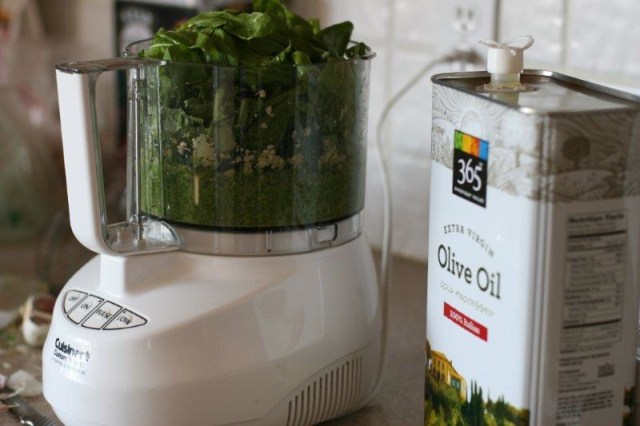
Do that until you have all the greens mixed in and add more olive oil if you feel it is too dry. Mine didn’t need more. When the greens are all incorporated, salt and pepper to your liking.

I like to have some pesto in the freezer to have on hand in the winter. I have heard some people put the pesto in ice cube trays and put the cubes in a Ziploc bag and just grab a cube when they need it. You can do that.  I like to put the whole batch in a large Ziploc and just break off what I need. This went into the freezer.


Hassleback Potatoes

Posted by Mo

Two years ago we had total crop failure of potatoes. We had zero potatoes out of something like 2 acres planted. Last year’s potatoes were OK. Sort of like our tomatoes are this year; some were OK and some were diseased.

Wyatt sure made up for it this year. The potatoes this year are plentiful, beautiful, and so, so delicious. Fresh potatoes are so creamy and good.

This is one of my favorite ways to make potatoes. By cutting them you get more roasted crunchiness to contrast the creamy inside of the potato.

Set your oven to 400F.  Make even cuts in your potatoes (don’t cut all the way through) and place them on an oven proof pan. Brush the potatoes with olive oil. Carefully brush oil inside the cuts you made and salt and pepper them. The potatoes will fan out and all the surface areas will crisp up so you want to get oil on all the surfaces.
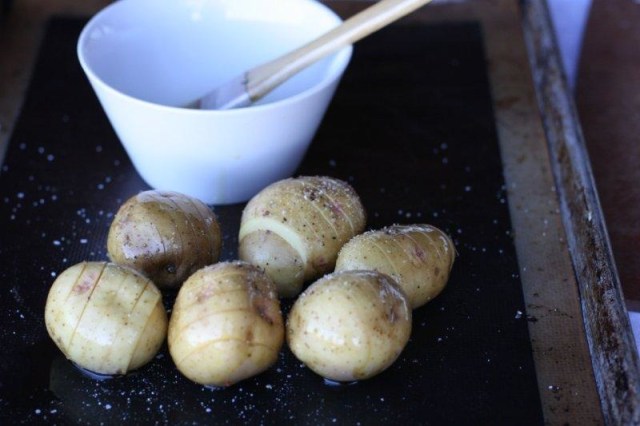
Roast them about 35 to 45 minutes, depending how big your potatoes are. Just keep an eye on them. When they are done to your liking you can eat them as is or add some cheese or herbs. I added a little cheese and some rosemary and let that melt down and inside the cuts.

Oh my goodness are these easy to make and so good.

I hope you are enjoying your CSA share this week. I sure did. If you have any questions or comments you can leave them here on the blog or email me at mo@redwagonorganicfarm.com.

Until next week.

-Mo

Posted in 2012, Newsletter | Tagged , | 5 Comments

CSA Newsletter: Week 16 (September 3rd, 2012)

Hello CSA members!

This week we hope to bring you garlic, potatoes OR green beans, eggplant, cucumbers, sweet peppers, cherry tomatoes OR red tomatoes OR 5 pounds red tomato seconds, and arugula. Large share members will also be getting beets, zucchini OR tromboncino squash, and spicy salad mix. Fruit share members will be getting peaches and (we think, we hope!) pears.

In this week’s newsletter:


Farm Tour THIS SUNDAY

Posted by Maddie

Let me just start by telling you how strange it was to write “September 3rd” in the heading of this week’s newsletter. It seems as if the entire farm season so far has been a rehearsal for the month of August…and now it’s over!? August and September are generally the busiest and most productive months on the farm. Wyatt says that when people think of “The Harvest,” now is the time of year they are imagining. As Mo explains in her posts this week, every year some crops grow and produce beautifully and others just sort of poke along. Despite this, I have to say that we have been growing an incredible amount of food on the farm and for the most part things are looking great.

A lot of people have been asking how many weeks are left in the CSA season. This is week 16 out of 22, meaning that after this week, there will be 6 weeks remaining. The last week of the CSA season is the week of October 14th. And speaking of October 14th, be sure to mark your calendars for our end-of-season CSA party which will take place that Sunday! More details to come.

For now, I want to remind you all that our second farm tour of the season is coming up THIS SUNDAY, September 9th. This time the tour will take place at the Teller Farm on Valmont Road. Take a look at last week’s newsletter for directions. We will have hay rides (super fun for the kids) and walking tours of the farm. There are no goats, llamas or alpacas at the Teller Farm, but you may get a chance to meet Eva’s pigs! Be sure to bring a hat and sunscreen and dress for the weather. We will have a couple of tents set up but otherwise there is not a whole lot of shade on the farm.

I hope to see everyone there!


Fruit Share Update

Posted by Maddie

I’ll start with the sad news. This week will be the 12th week for the fruit share this season, meaning it will be the final “regular season” week for members to receive fruit. The great news is this: western slope farmers are continuing to have an incredible fruit season and we will be re-opening the fruit share for 6 more weeks!

The fall fruit share will start next week and will primarily include apples and pears. You can log in to your account to sign up for the fall fruit share.

Happy September and I’ll see everyone at pick-up!

-Maddie


Tomato Seconds

Posted by Mo

Every year some crops do really well and some struggle or fail completely. That is just the nature of farming. This year our tomatoes started out like gangbusters. A few weeks ago we started to see some signs of disease and alas: we, like most of the farms on the Front Range have been hit with either a tomato blight or virus.  We have some nice tomatoes, but most of the plants have some sort of problem. They are producing some tomatoes, but not lots of perfect ones we usually have. The ‘not perfect’ tomatoes we pick for ‘seconds’.
The good news is the seconds tomatoes taste fine. You can eat them raw, cook with them or freeze them.

You have a choice this week of 5 pounds of tomato seconds. I thought I would show you how I make one of my favorite tomato sauces.


Roasted Tomato Sauce

Posted by Mo

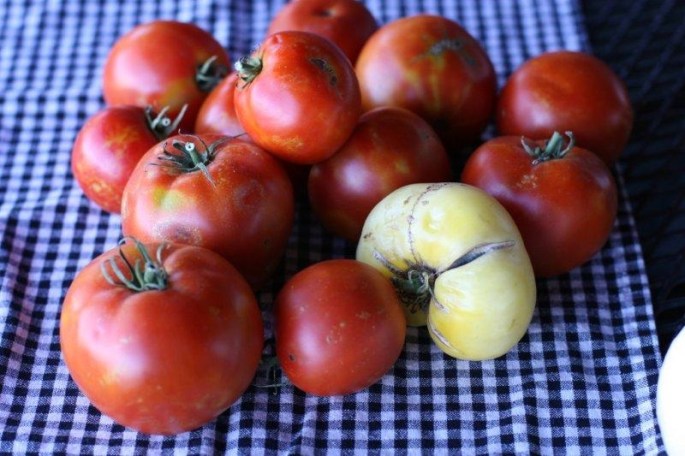
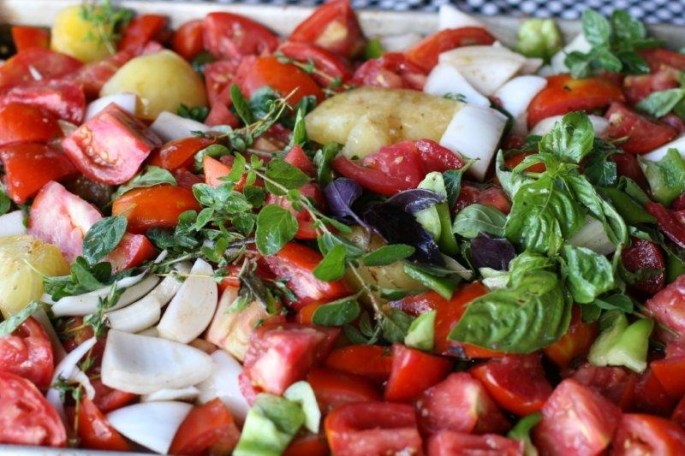
Here are 5 pounds of tomato seconds.

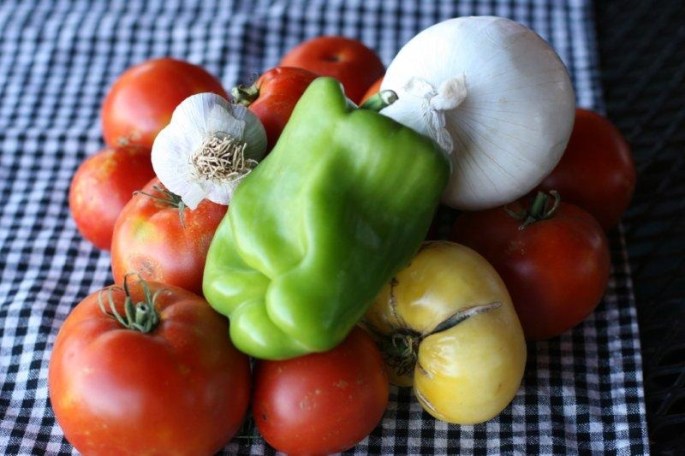
I think I’ll use the garlic and pepper from this week’s share in my sauce. You can do that too or just use tomatoes. I added an onion from last week’s share in my sauce too.

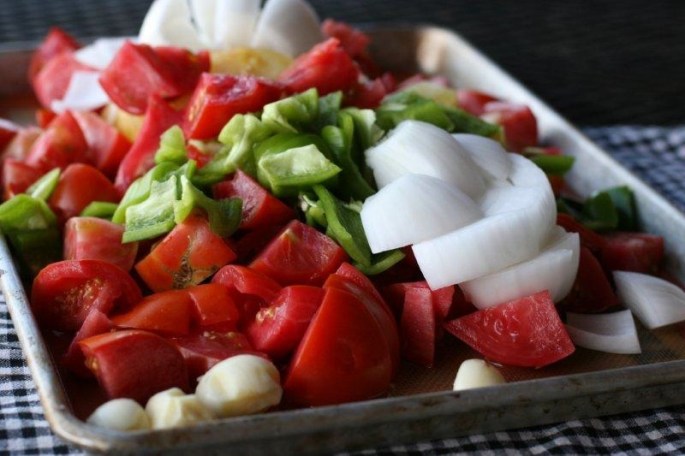
Core and roughly cut everything up and put it on a baking sheet that will hold it all. You might use 2 9X13 baking pans.

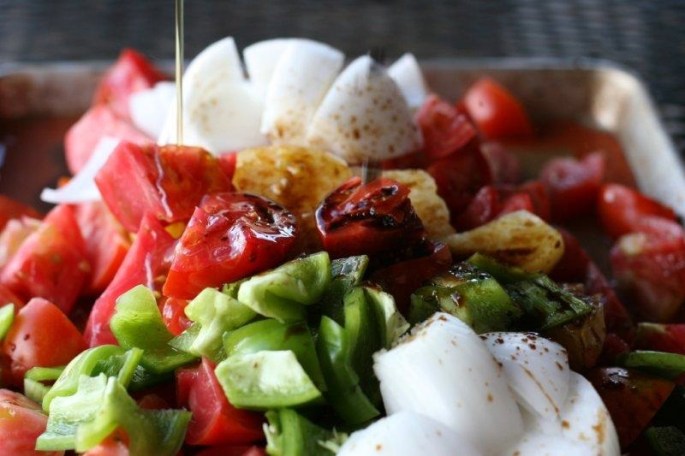
Now pour olive oil and balsamic vinegar over the whole thing.

And mix it all up with salt and pepper and any herbs you have in your garden and put that in the a 350°F oven to roast for a half an hour or so.

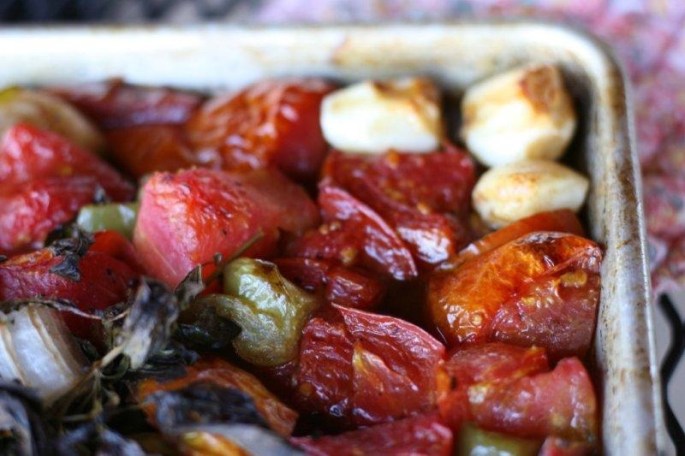
It should look something like this when it is done roasting. There is a lot of liquid so be careful removing it from you oven.

Roasting caramelizes sugars and condenses flavors, you can almost see that here.

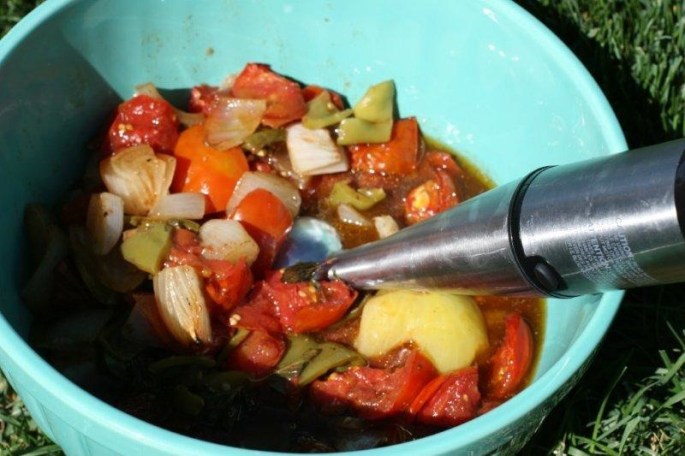
I dump everything into a bowl and fish out the woody and too charred herbs and throw them away. Then I hit the roasted tomato mixture with an immersion blender.

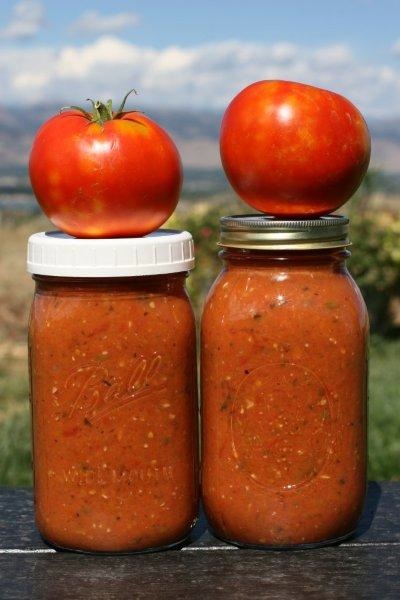
I got just over two quarts of sauce out of my 5 pounds of ‘seconds’ tomatoes.

When life gives you seconds, make something second to none.

Have a great week.

-Mo
Posted in 2012, Newsletter | Tagged , , | 2 Comments